Adult Learning
Computer Skills for Beginners - West Bridgford Library - Adult Learning
.
Did you know ? We've been bringing you culture, learning and libraries since 2016. Find out more about 10 years of Inspire.

| Date | - |
|---|---|
| Sessions | Fridays: 10am - 12pm |
| No. sessions | 4 |
| Venue | Beeston Library, Beeston |
| For ages | 19+ |
| Group size | 5 - 12 |
| Cost | FREE - £32 |
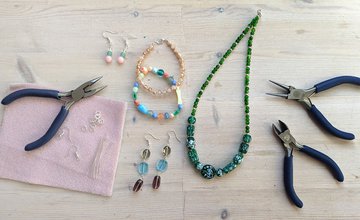
Learn how to design and make your own beaded bracelets and necklaces in this relaxed beginner-friendly course. You will explore beads, colour, pattern, basic jewellery findings and simple finishing techniques, creating wearable pieces to keep, gift or sell. We will start with stretch bracelets, looking at how to choose beads, plan a pattern, measure for size and secure the elastic neatly.
You will then move on to stringing beads onto jewellery wire to create bracelets or necklaces with clasps. We will look at how to use basic findings such as jump rings, clasps and necklace ends or crimps, and how to finish your jewellery so that it is wearable and secure.
There will be demonstrations, guided practice and time to experiment with your own colour choices, bead combinations and designs. You will be encouraged to keep materials simple and affordable, and you can use new beads, beads you already have, or old jewellery that can be taken apart and reused.
No previous experience of jewellery making is required.
By the end of the course you will be able to:
• Identify and use basic jewellery-making materials, including beads, elastic, beading wire, clasps and jump rings.
• Design and make a simple elastic bracelet using your own choice of beads.
• Plan a beaded bracelet or necklace using colour, pattern, spacing and length.
• String beads onto jewellery wire and attach a simple fastening securely.
• Create at least 2 finished bracelet or necklace to keep, gift or develop further.
• Share your design choices with others and identify one technique you would like to practise again.
You will need:
-A selection of beads (These can be new beads, beads you already have, or beads from old/broken jewellery)
- Jewellery elastic, 0.7mm or 0.8mm is useful for stretch bracelets.
-Jewellery beading wire, this is a flexible cable not normal wire and is sometimes called Tiger Tail, Beadalon or beading wire.
-Basic jewellery findings. These are the components that hold the jewellery together! You will need a small selection of clasps and jump rings, necklace ends (sometimes called callottes) and crimp beads. These can be in gold or silver colour.
-A bead mat or tray is optional, but useful to stop beads rolling away.
-If you have jewellery pliers please do bring them, but the tutor will have some to borrow.
You can get headpins and earwires in packs from Amazon, Boyes or Hobbycraft or buy individually/ in small packs in person/online from The Bead Shop in Nottingham.
Funding and Fees
If you receive certain benefits, you may be able to take the course for free.
If money is stopping you from enrolling, please visit our funding page to see what help is available.
Living in England
To book and join one of our courses, you must live in England permanently and either:
· Live inside the East Midlands Combined County Authority (EMCCA) area (Nottinghamshire or Derbyshire)
or
· Live outside the devolved areas listed below
You cannot enrol if you live in these devolved areas:
Greater Manchester Combined Authority (GMCA)
Liverpool City Region Combined Authority
North East Combined Authority
South Yorkshire Mayoral Combined Authority
Tees Valley Combined Authority
West Midlands Combined Authority
West of England Combined Authority
West Yorkshire Combined Authority
Cambridgeshire & Peterborough Combined Authority
York and North Yorkshire Combined Authority
Hull and East Yorkshire
Greater Lincolnshire
Devon and Torbay Combined County Authority
Cornwall Council
Lancashire Combined County Authority
Buckinghamshire Council
Residency Requirements (Additional Information)
If you live in the UK on a visa, we’ll need evidence of your visa to confirm funding. You can upload this when applying, and you’ll need to complete a short questionnaire.
Some exceptions include:
Your visa must last until after your course ends.
Asylum seekers must have lived in the UK for at least 6 months while their claim is being processed.
You are supported by your local authority under Section 23C or 23CA of the Children Act 1989, or under the Care Act 2014.
Anyone who does not meet the funding criteria would need to pay full course fees.
Check the FAQs page, or get in touch:
Adult Learning
.

Adult Learning
.

Adult Learning
And it's packed with fabulous new courses for you to book for autumn!

By becoming a library member you will be able to borrow books and items for FREE in libraries across the county, including mobiles. You can also access eResources, Ancestry and more!
Not a member yet? Join us - become a library member