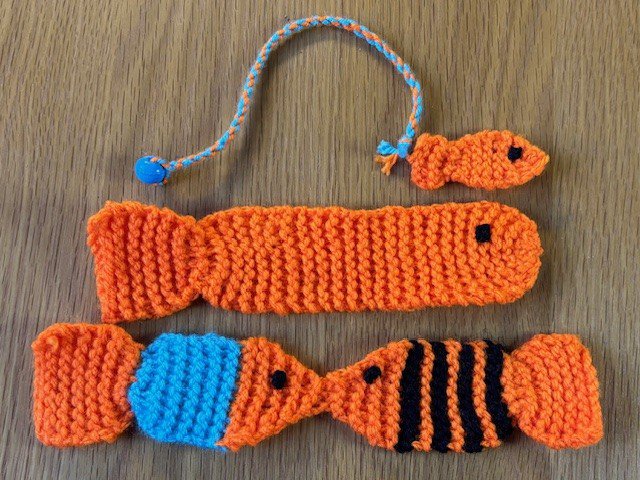
These bookmarks are for you to make and keep. To find out what we’ll be donating to our charity partner, Trussell, this year please visit the Inspire Charity Knitting Challenge main page.
You will need:
UK 3.25mm knitting needles (Project One) / UK 4mm knitting needles (Project Two & Three)
Bead(s) with a large enough hole to thread 2 strands of yarn (project one only)
Large darning needle
Scissors
Ruler or tape measure
We used 11g double knitting DK yarn all 3 projects (2g for project one, 4g for project two and 5g for project three)
All fish are made using the knit (K) stitch (st).
Please note: These instructions are for right-handed knitting. If you are left handed you may find it easier to mirror these instructions (e.g. use left where we've said right, and vice-versa.)
Knitting Basics
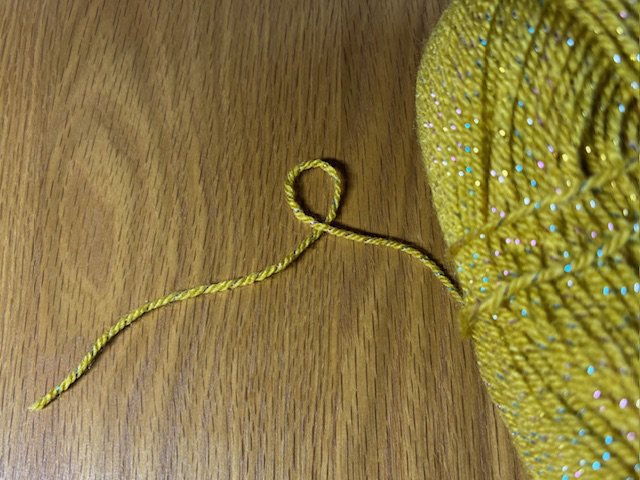
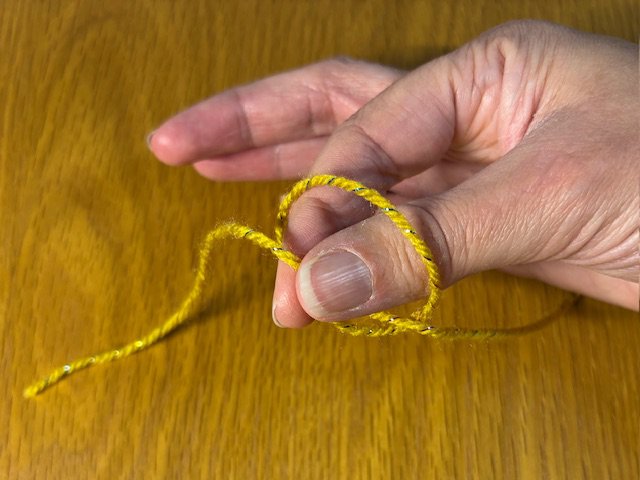
Step One
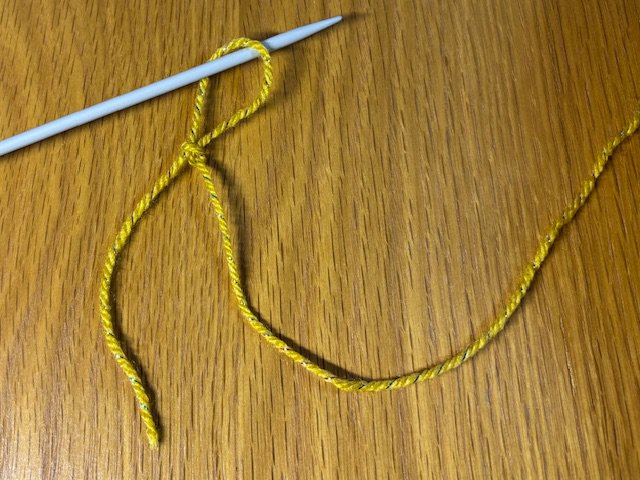
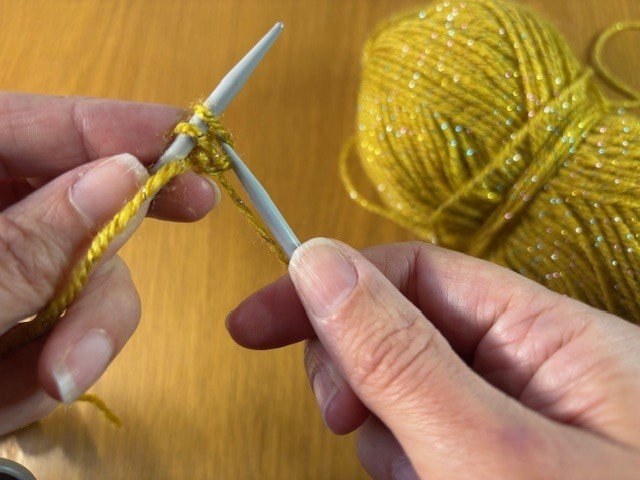
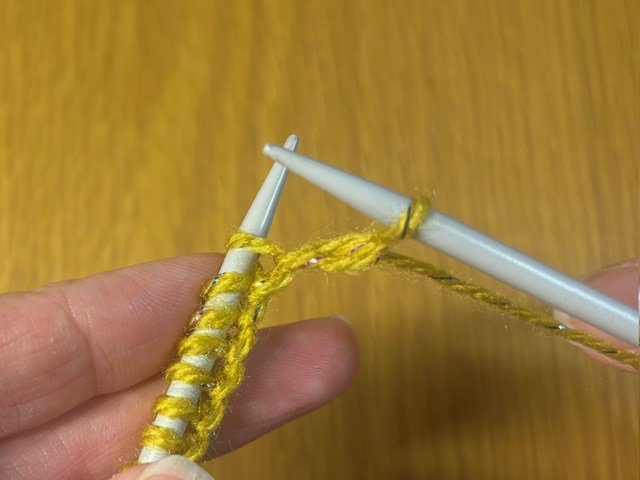
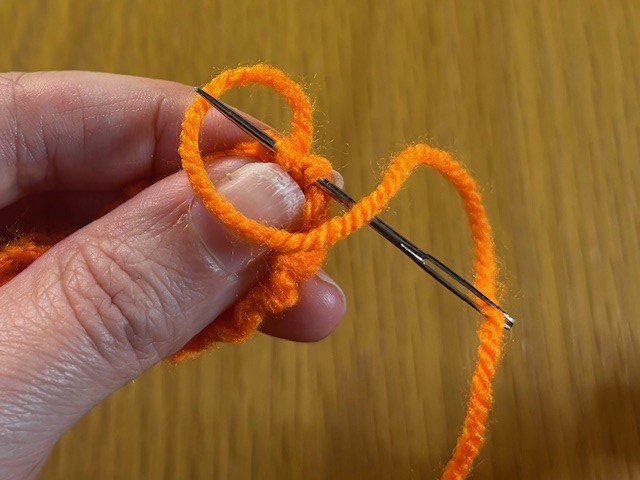
Make a loop in the tail of your yarn
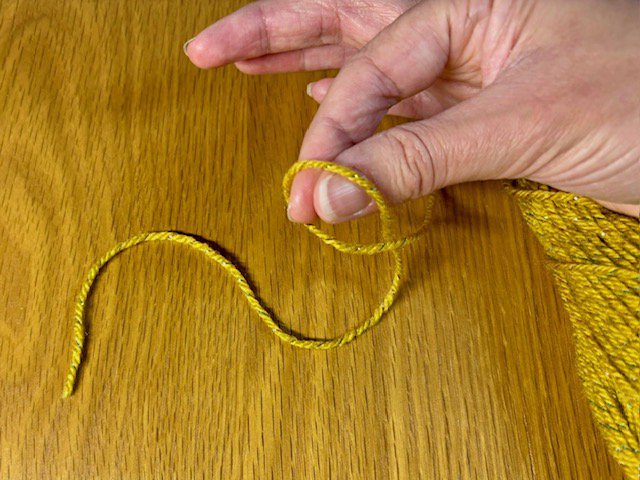
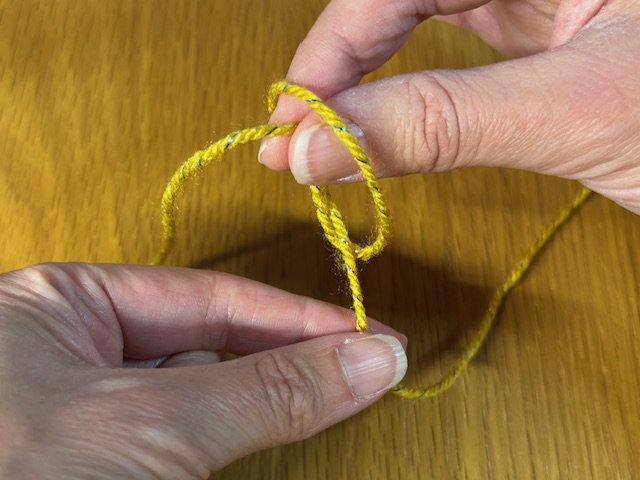
Step Two
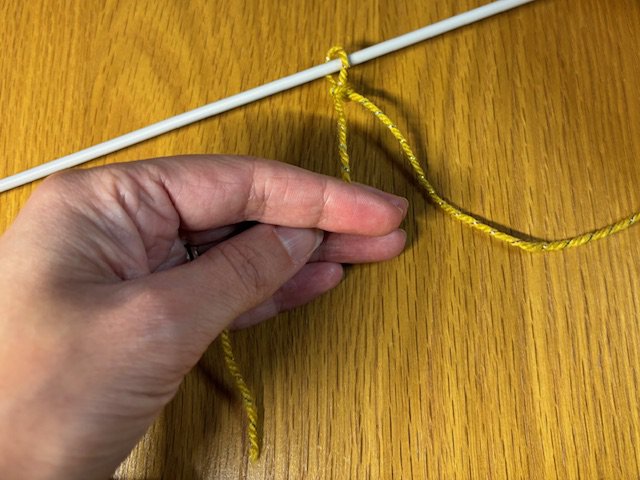
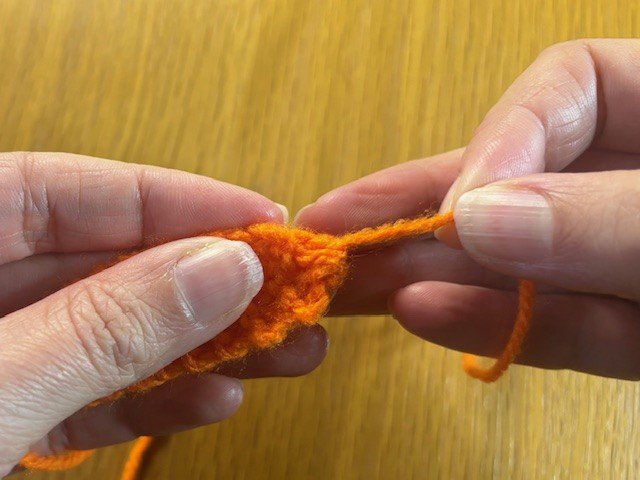
With your thumb and forefinger, reach through the back of the loop.
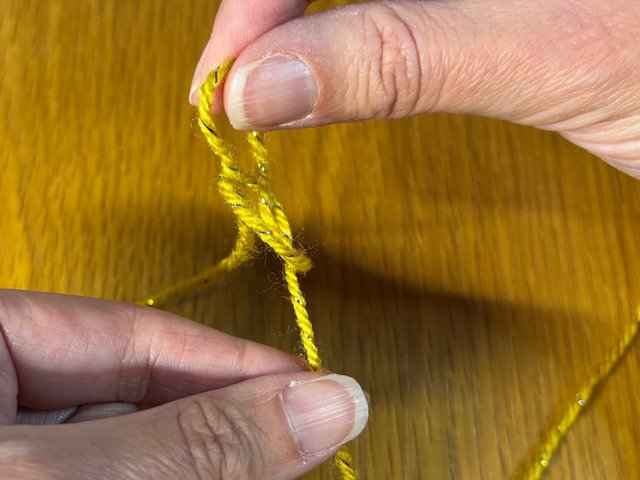
Step Three
Pinch the tail end of the piece of yarn between your thumb and forefinger.
Step Four
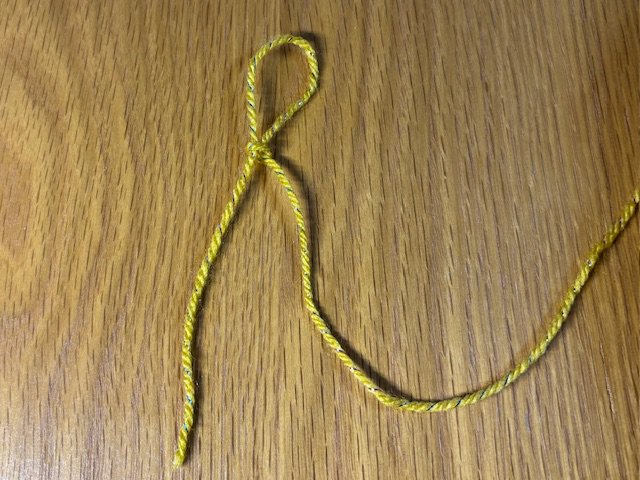
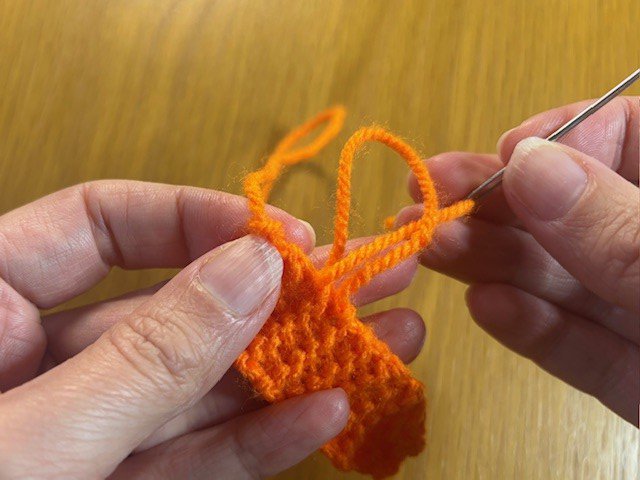
Pull on the yarn on the side closest to the ball of yarn (called the 'working yarn') to finish the knot.
Step Five
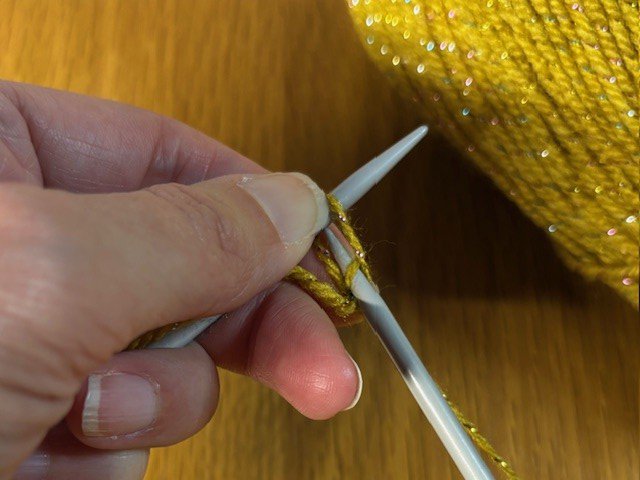
Put one knitting needle through the loop in your slip knot. Pull the tail end (the one on the opposite side to the ball of yarn) to tighten the knot into your fist stitch. Don't pull it too tight, as you'll need to fit your second needle through it to start adding additional stitches (casting on).
Make sure your yarn tail is nice and long, as you'll need to stitch it in to the project later when you're finishing it off.
Tie your slip knot and put it onto one of your knitting needles to make your first stitch.
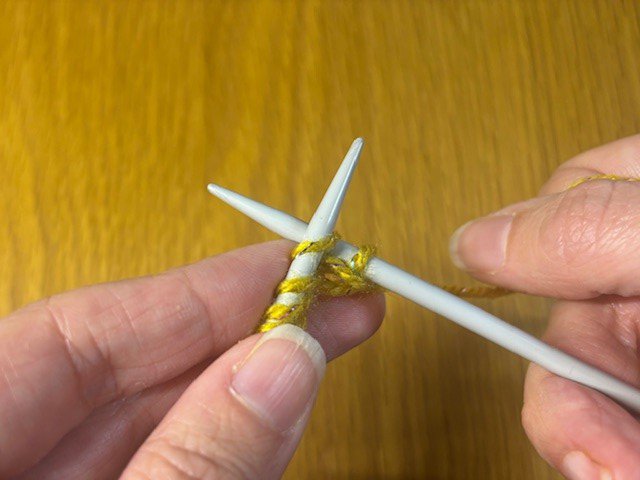
Hold the knitting needle with your first stitch in your left hand. You can hold the tail of your yarn (the piece on the opposite side to the ball of yarn) out of the way with your little finger and ring finger, so it doesn't get mixed up with the working yarn (on the side closest to the ball of wool).
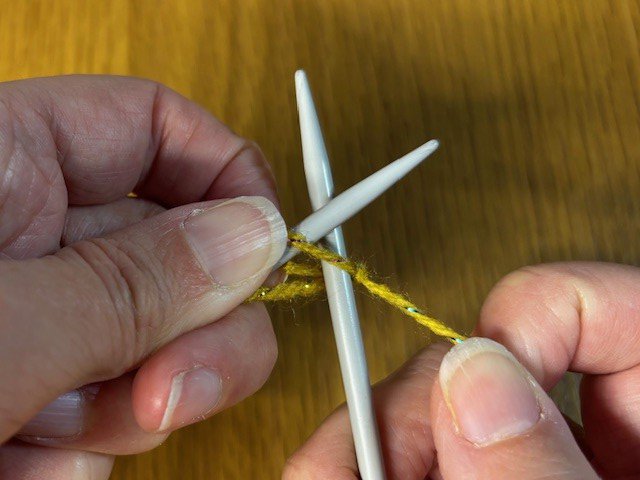
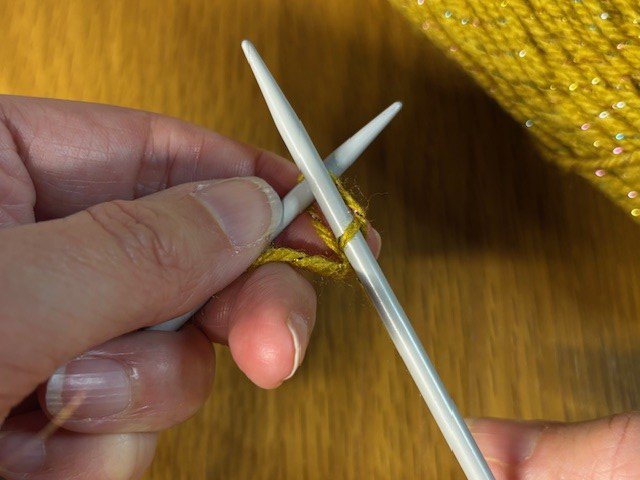
Push your second knitting needle through your first stitch, going behind your first needle.
Step Two
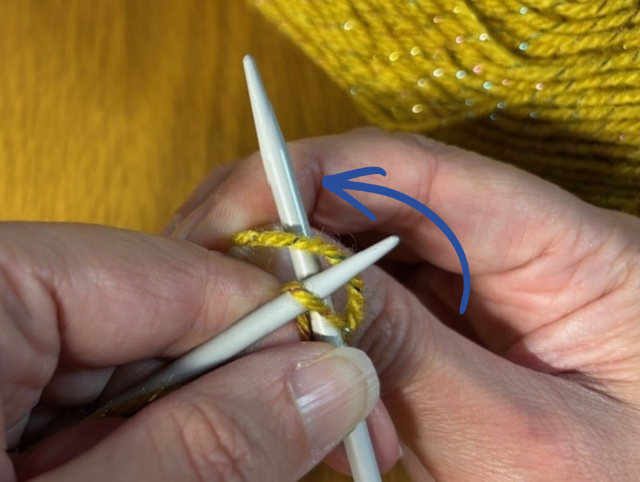
Take the piece of working yarn, bring it in front of your right-hand knitting needle and wrap it around from front to back (anti-clockwise).
Step Three
Gently pull the working yarn downward to keep it wrapped around the right-hand needle, and use
the right needle to draw that wrapped yarn through your first stitch, creating a new
loop on the right needle.
Step Four
Bring your left-hand needle in front of the right-hand needle and over the front of your second stitch (the one on the right-hand needle).
Put the left-hand needle through your second stitch, from right to left.
Slip the right-hand needle out, so that both stitches are on the left-hand needle.
Gently pull the working yarn to tighten the second stitch - but don't pull too tight.
Step Five
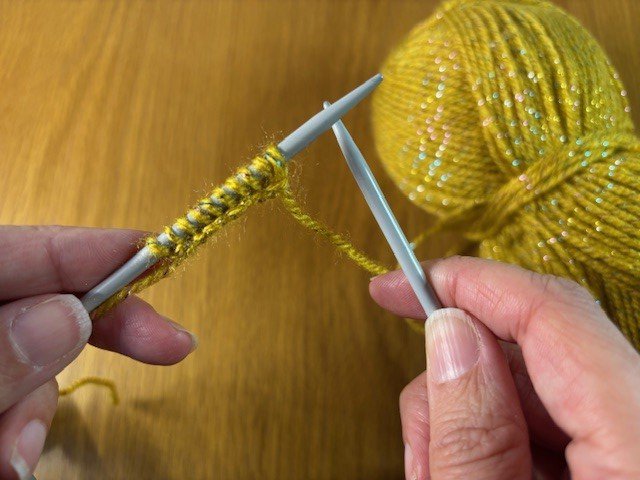
Repeat steps one to four until you have the number of stitches that you need for your project.
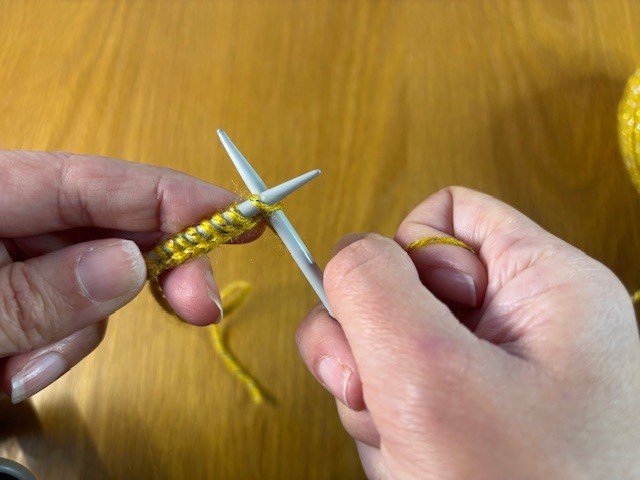
Step One
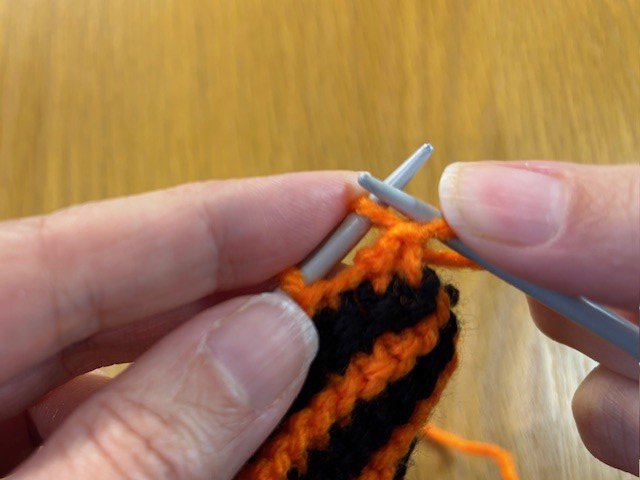
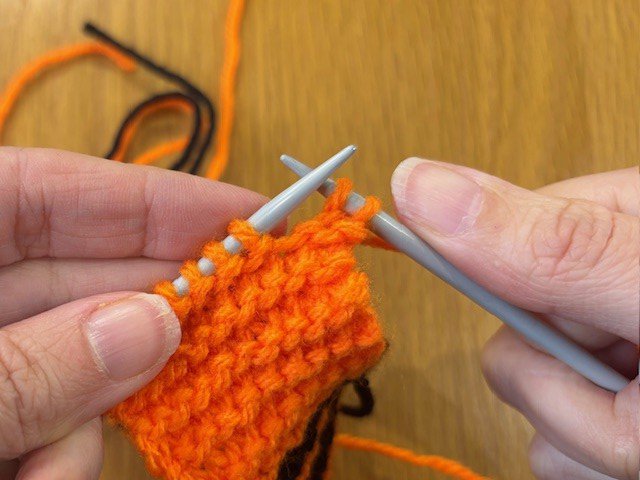
Hold the knitting needle with your row of stitches in your left hand.
Keep the empty needle in your right hand.
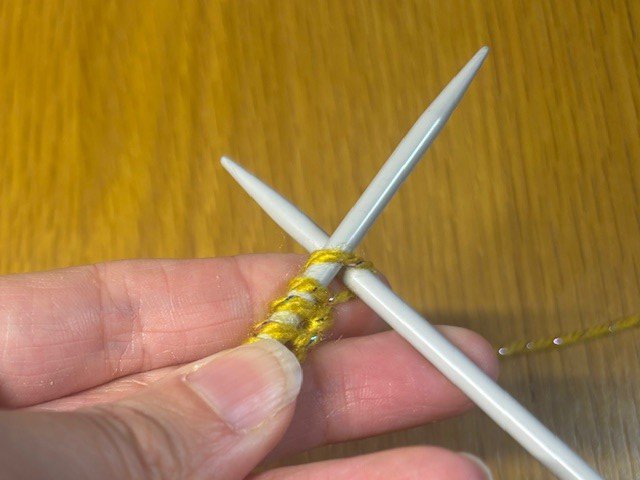
Slide
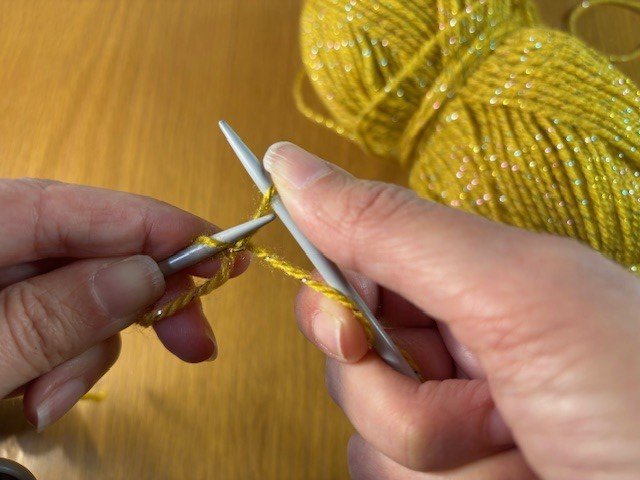
the tip of the right needle into the first stitch on the left needle from front
to back, forming an “X” shape with the needles.
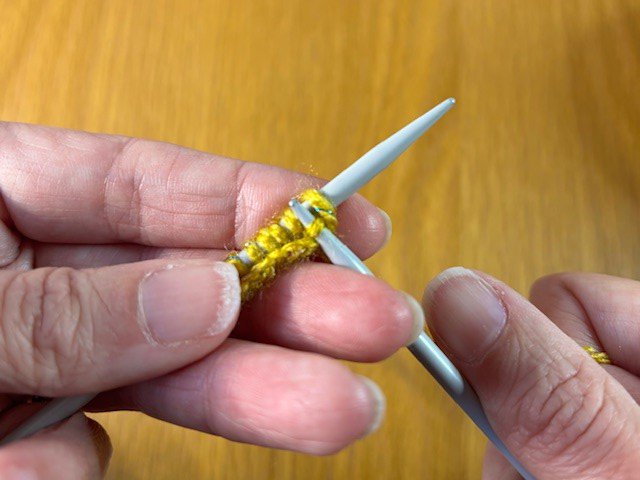
Step Two
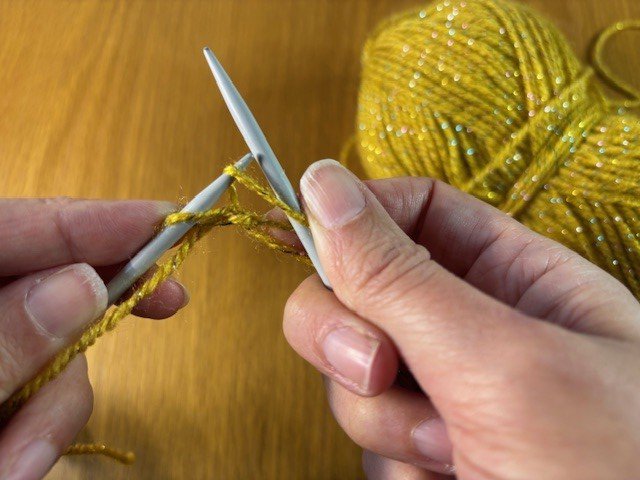
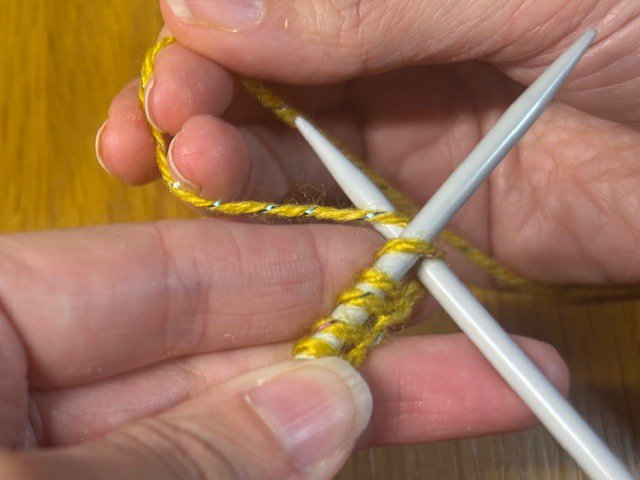
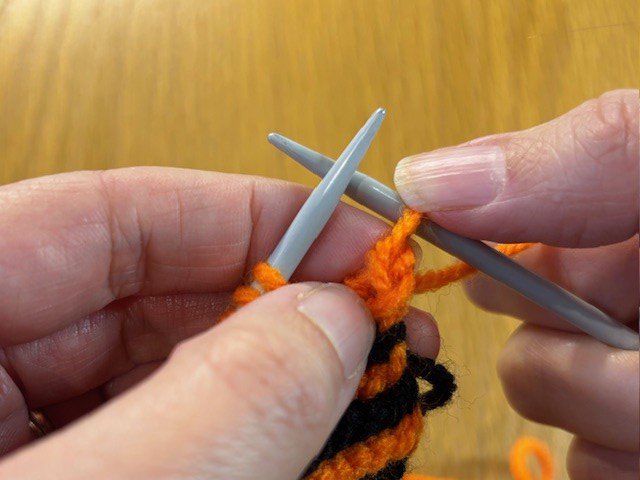
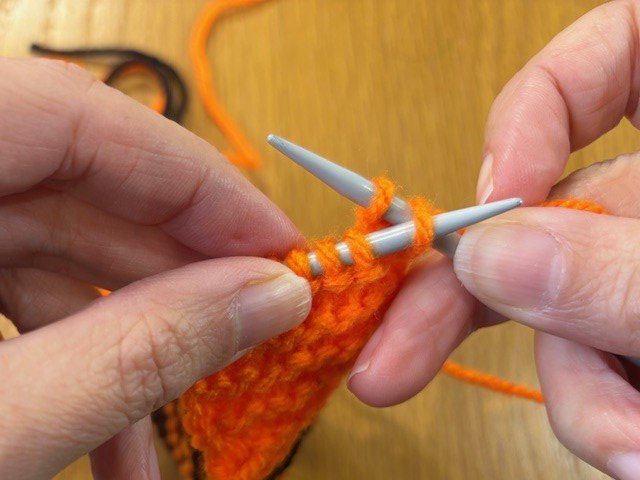
Bring the working yarn (the strand connected to your ball of wool) around the right-hand needle, from back to front.
Step Three
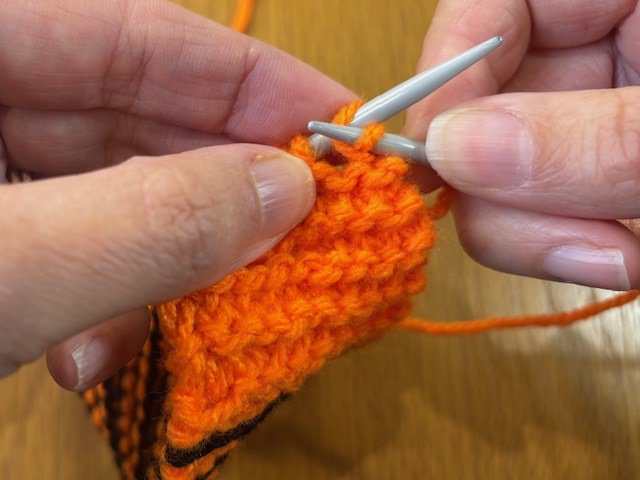
Use the right needle to draw that wrapped yarn through the stitch, creating a new loop on the right needle.
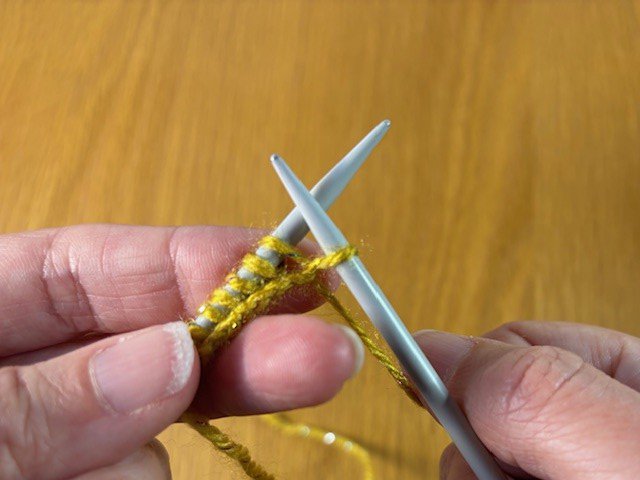
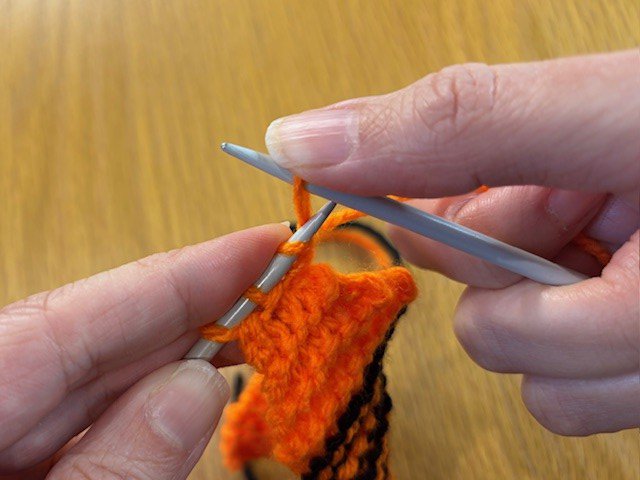
Step Four
Let the original stitch slide off the left-hand needle, and gently pull on the working yarn to tighten the new stitch on the right-hand needle - but don't pull it too tight.
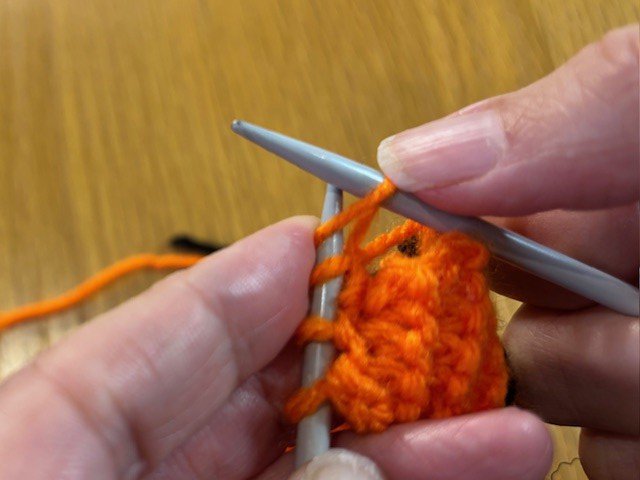
Step Five
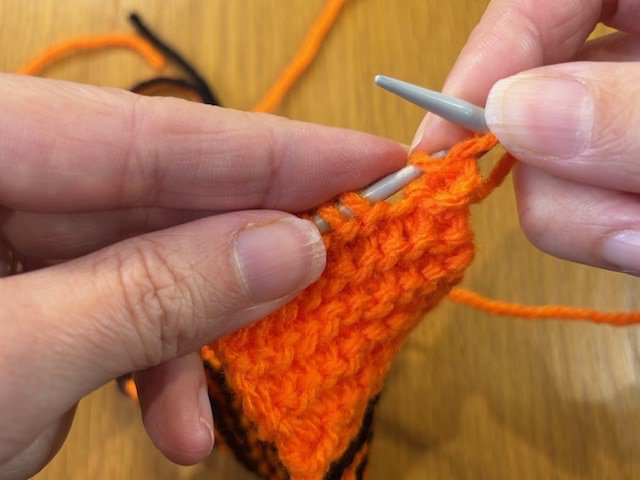
Push your right-hand knitting needle through the second stitch on the left-hand needle, and repeat steps one to four.
Keep going until you reach the end of the row, then swap hands with your knitting needles and start the process again.
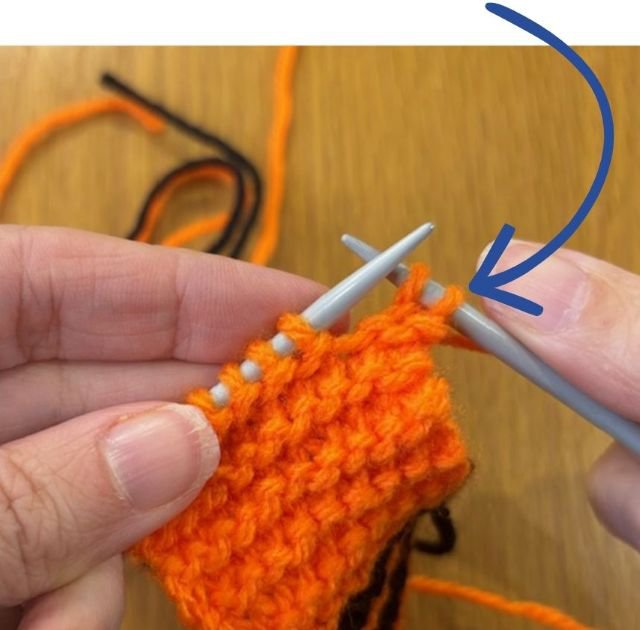
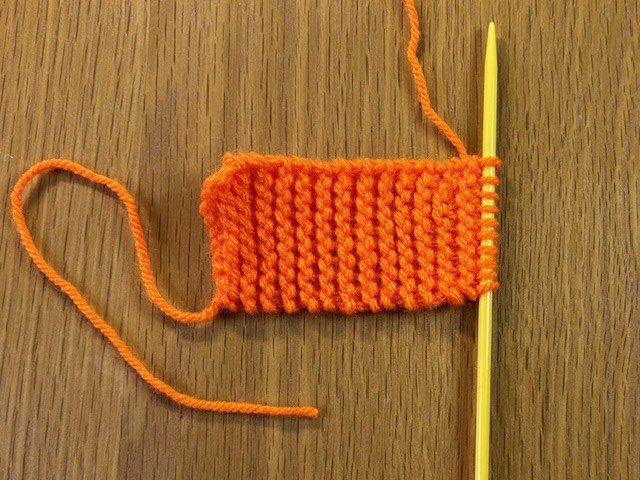
Keep knitting rows until your project is the right length.
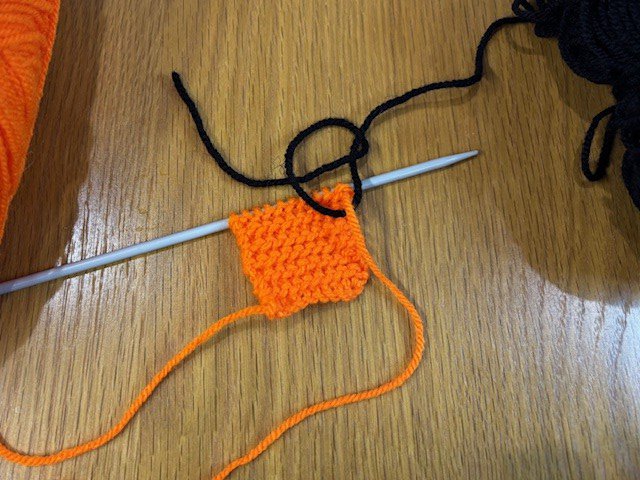
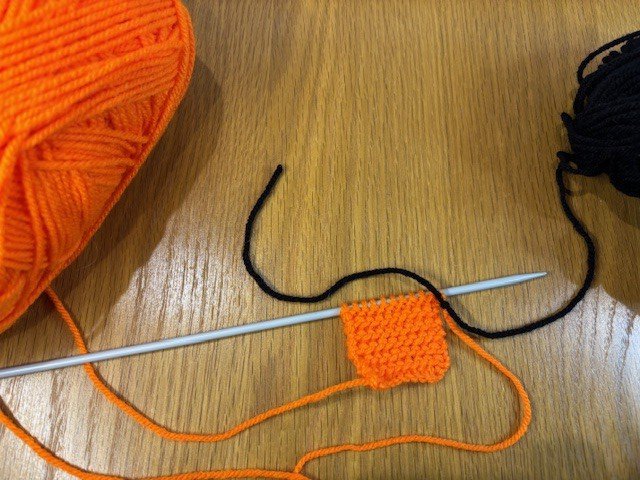
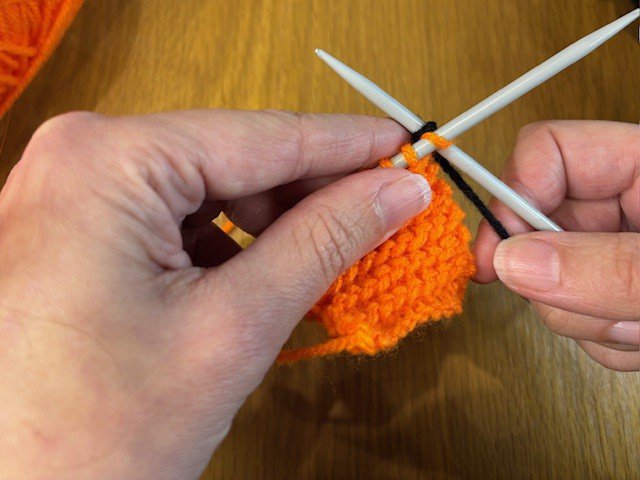
Tie your new ball of yarn onto your working yarn with a simple knot. Make sure you leave a long tail of around 20cm, as you'll need to stitch this into the project later when you're finishing off.
Slide the knot up the working yarn until it sits just below the first stitch.
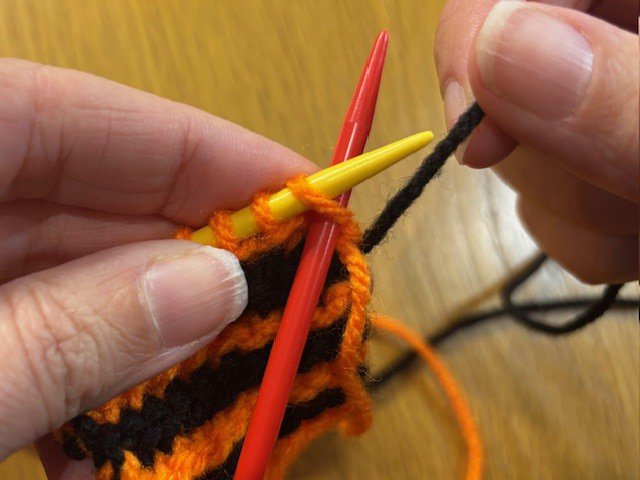
Start knitting with the new colour.
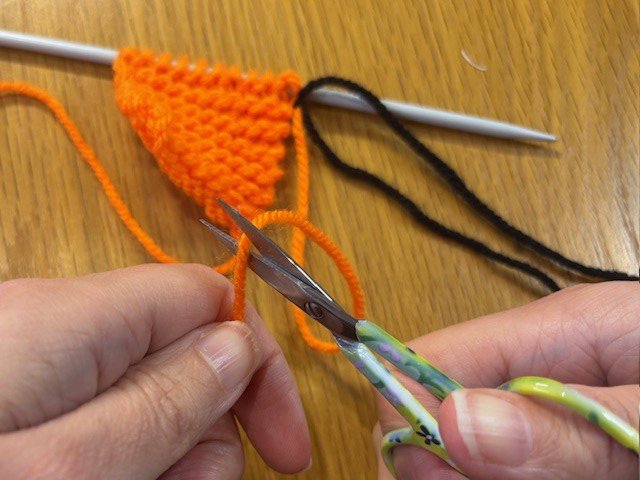
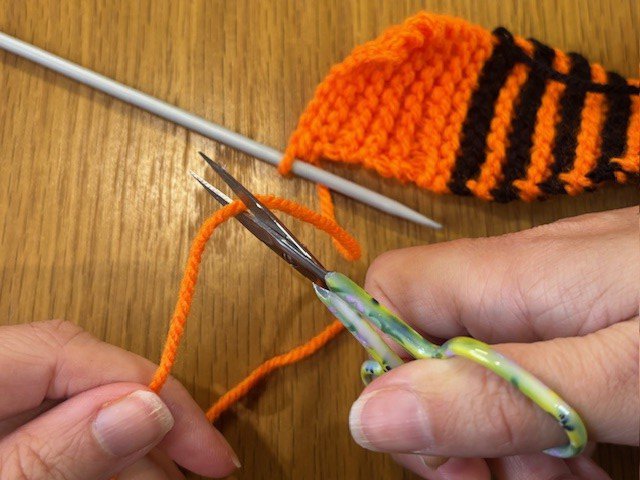
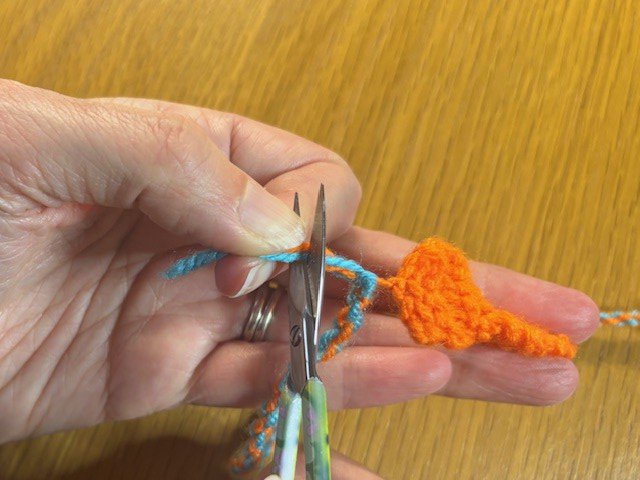
If you're going to knit quite a few rows with your new colour you can snip off the yarn from the first colour, leaving a tail of around 20cm to stitch in later when you finish off your project.
Thin Stripes
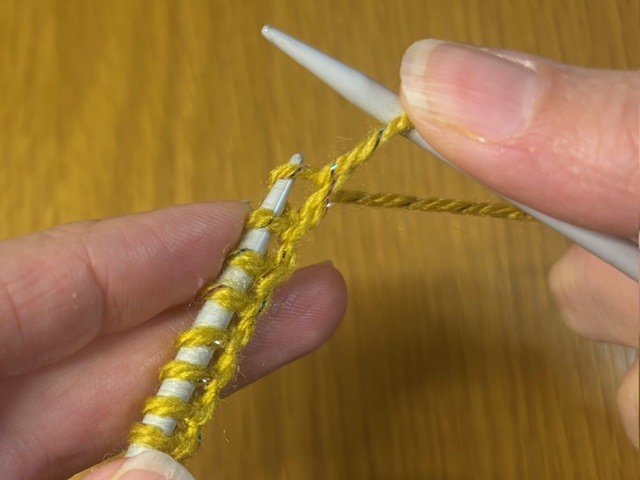
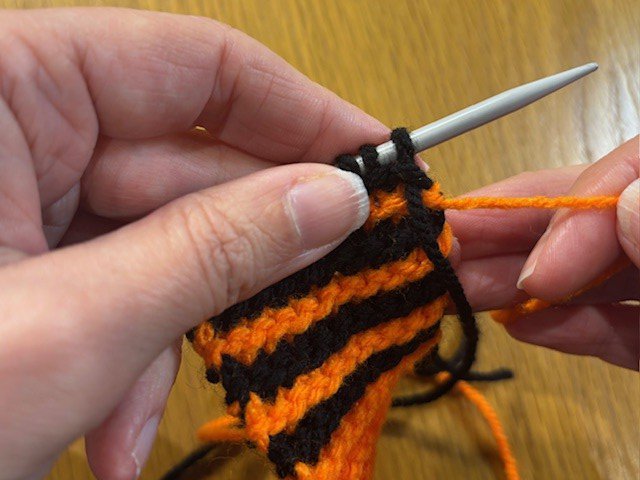
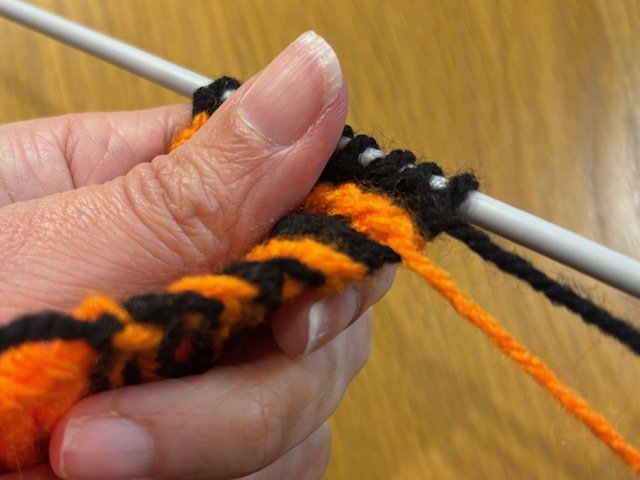
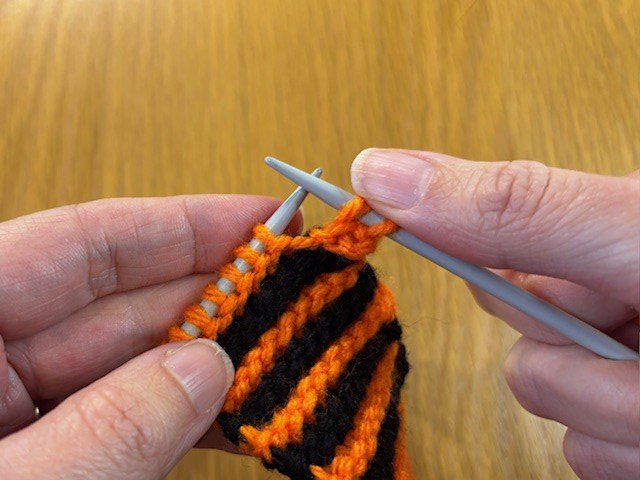
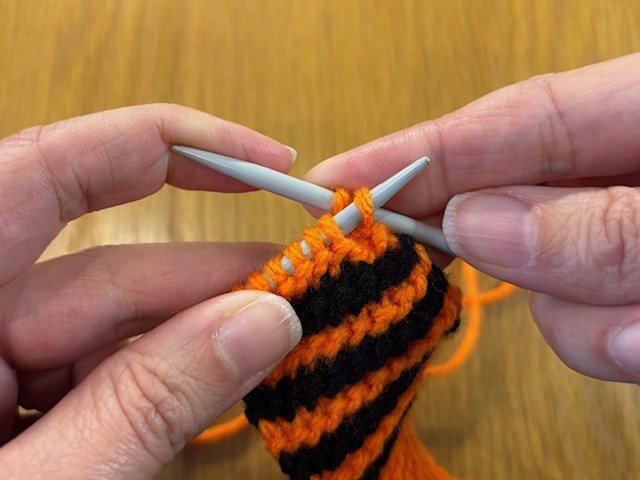
To create a pattern of thin stripes, without ending up with a lot of very close together yarn tails to stitch in, you can leave both colours attached and just keep swapping.
Knit as many rows as you want with colour one then attach colour two.
Knit two rows with colour two. Both pieces of working yarn should now be on the same side.
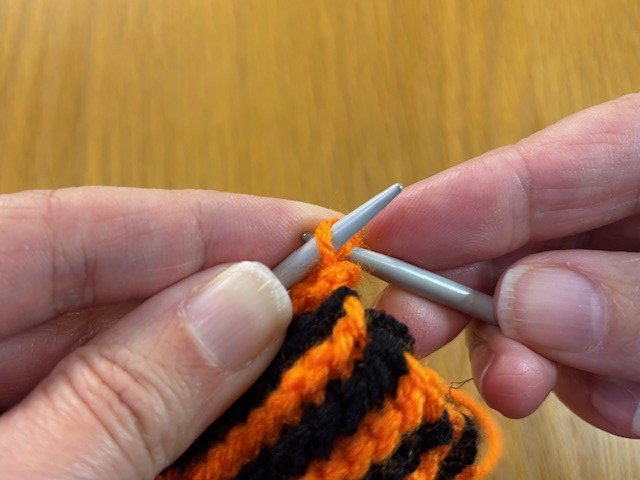
Bring the working yarn from colour one behind the working yarn from colour two and start to knit your next row. Be careful not to pull either strand of working yarn too tight or leave them too loose.
Keep repeating this process until you have enough stripes.
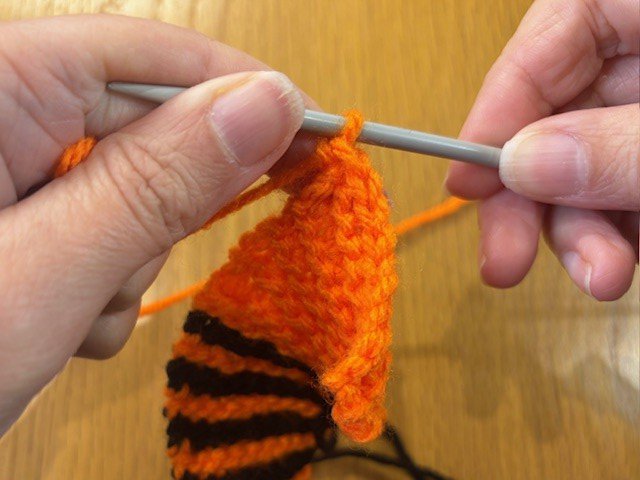
You can 'decrease' stitches to make the project narrower or create a curved edge.
Step One
Knit two stitches, so that you have two on your right-hand needle.
Step Two
Put your left-hand needle through the right-hand stitch on your right-hand needle then bring it over the top of the left-hand stitch.
Step Three
Pull the left-hand stitch through the right-hand stitch. You should now have the left-hand stitch on the right-hand needle and the right-hand stitch on the left-hand needle.
Now, slip the right-hand stitch off the left-hand needle.
If you're only decreasing by one stitch you can now continue to knit the rest of the row on your left-hand needle.
If you're decreasing by more than one stitch at a time, knit another stitch, then repeat steps two, three and four.
Repeat until you've decreased the required number of stitches for your pattern.
You can add more stitches to make the project wider. For this tutorial we've used the same method that we used for casting on new stitches at the start of a project.
Step One
Knit a new stitch onto your right-hand needle but instead of taking the first stitch off your left-hand needle, bring your left-hand needle in front of the right-hand needle and over the front of your new stitch (the one on the right-hand needle).
Step Two
Put the left-hand needle through the right-hand side of the new stitch. Slip the right-hand needle out, so the new stitch is now on the left-hand needle.
If you only needed to increase by one stitch you can continue knitting the rest of the row.
If you need to increase any more stitches, repeat steps one and two until you have the right number of stitches for your pattern.
Knit two stitches, so that you have two stitches on your right-hand needle.
Step Two
Put your left-hand needle through the right-hand stitch on your right-hand needle.
Bring the right-hand stitch over the top of the left-hand stitch. You should now have the left-hand stitch on the right-hand needle and the right-hand stitch on the left-hand needle.
Now, slip the right-hand stitch off the left-hand needle.
Step Three
Knit another stitch, then repeat step two.
Keep repeating this process until you only have one stitch left.
Step Four
Cut your working yarn off the yarn ball, leaving a tail of at least 20cm.
Take your last stitch off the needle, and thread the yard tail through it, pulling it tight.
The yarn tail can now be stitched in - see the section on Finishing Off your project.
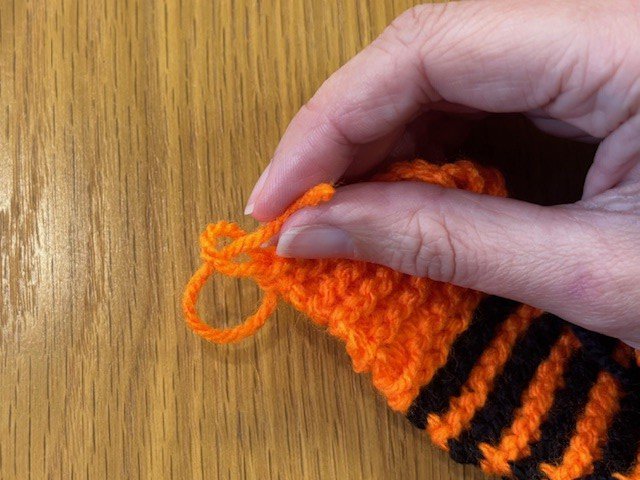
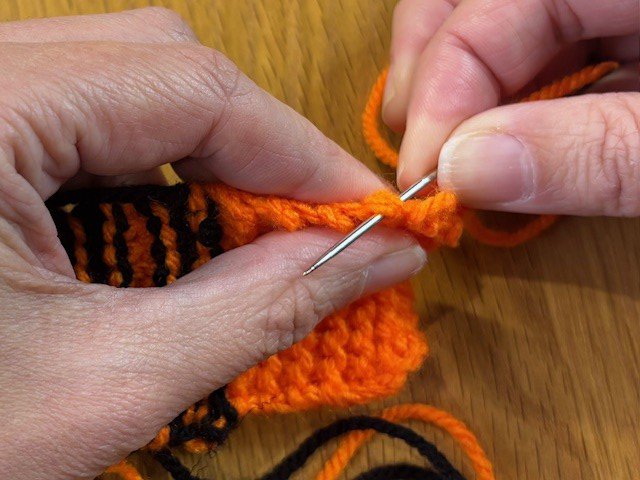
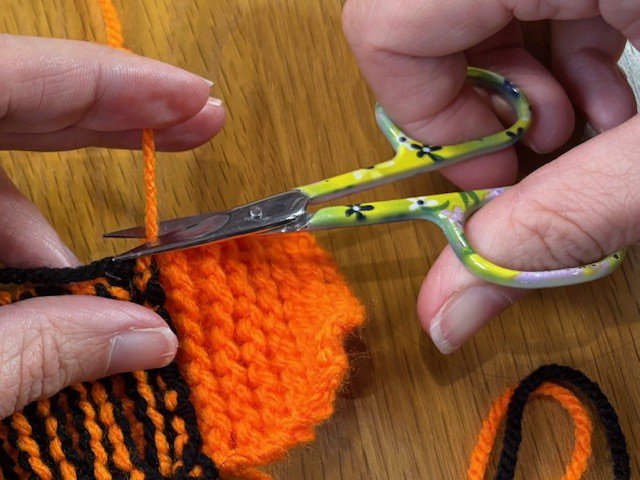
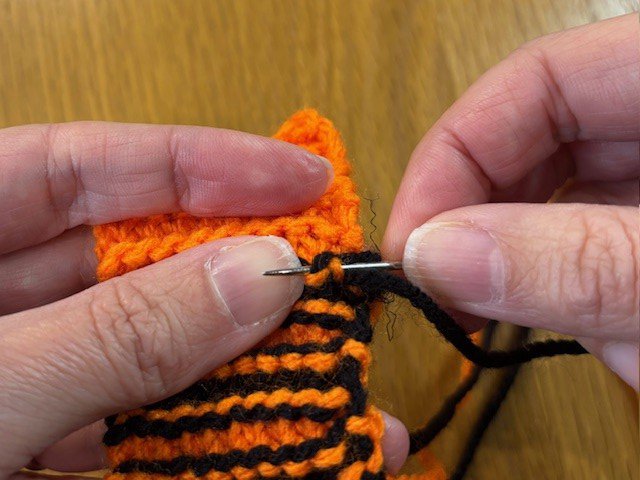
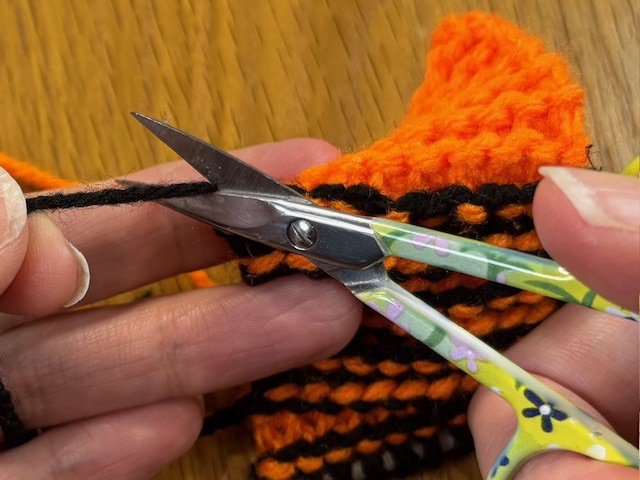
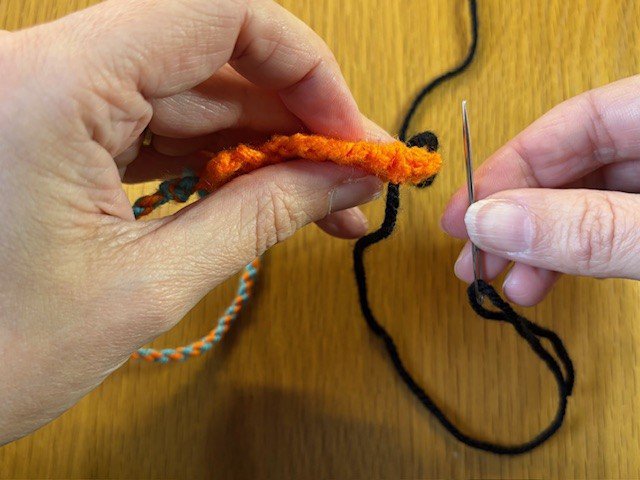
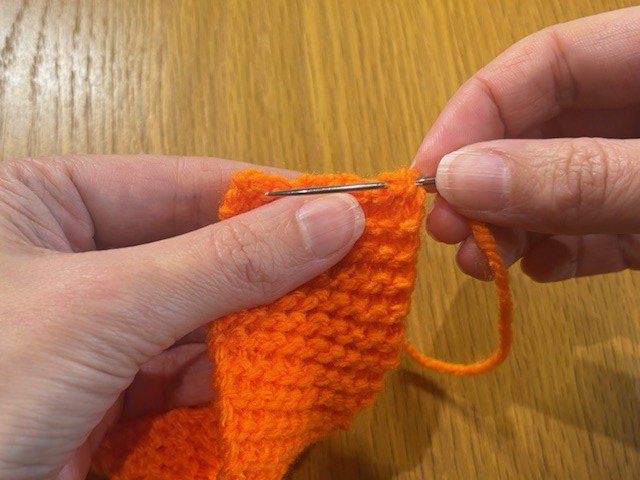
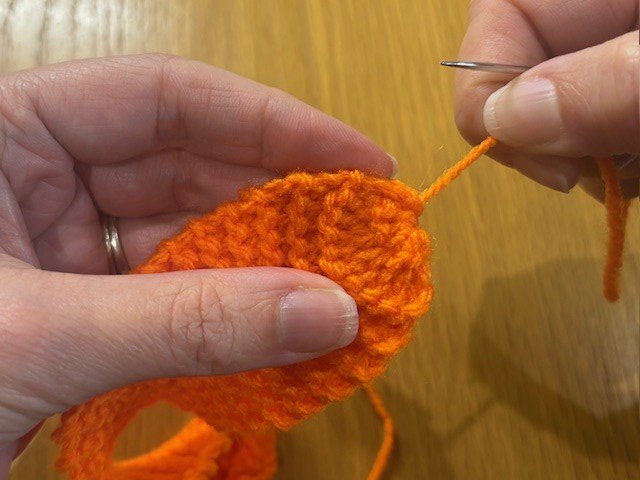
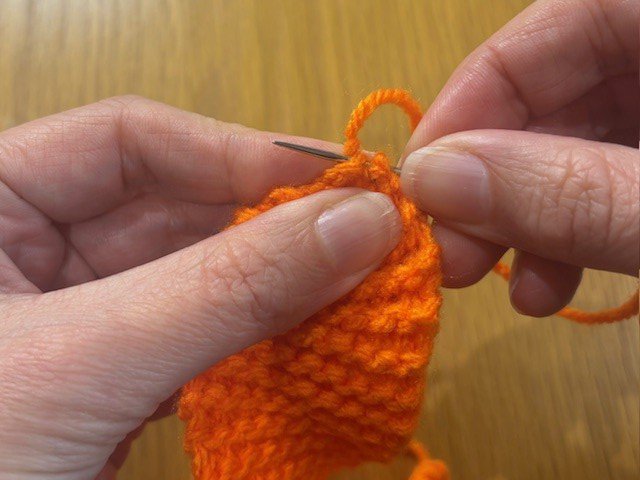
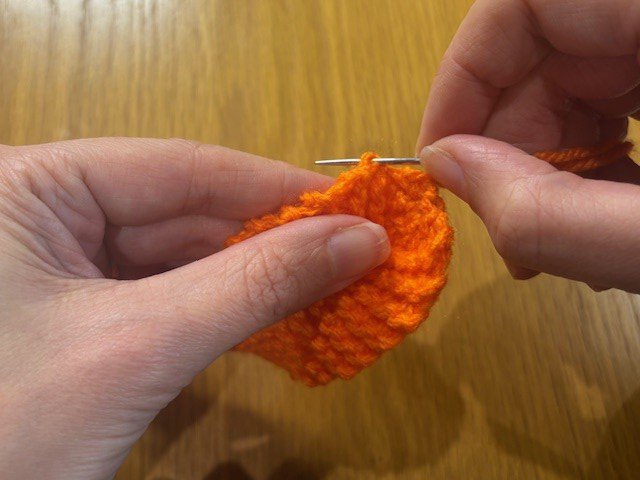
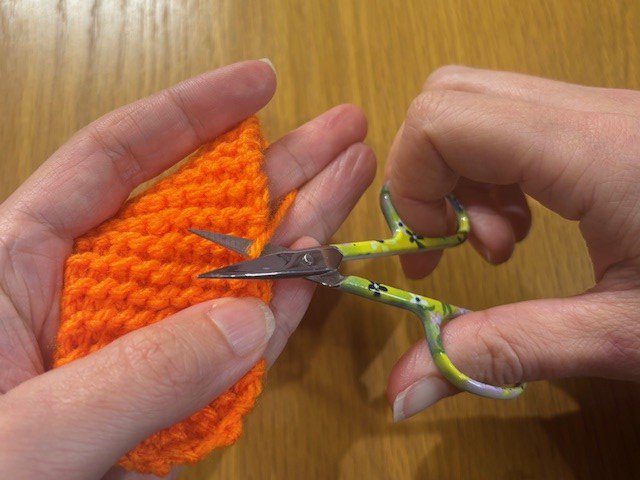
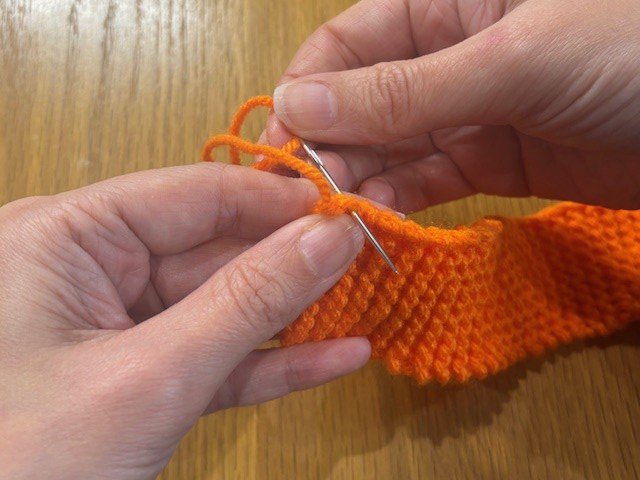
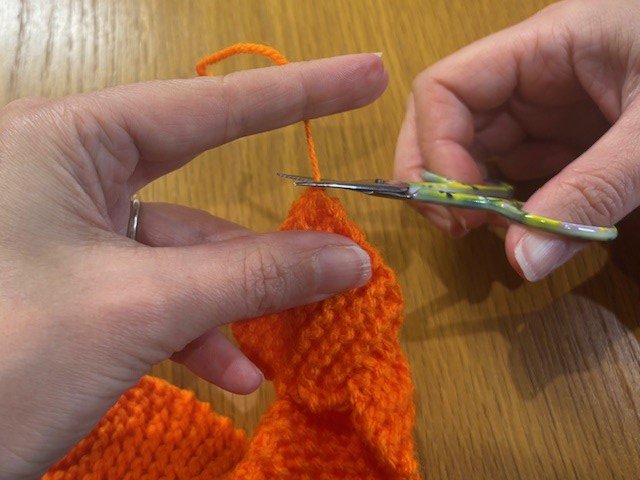
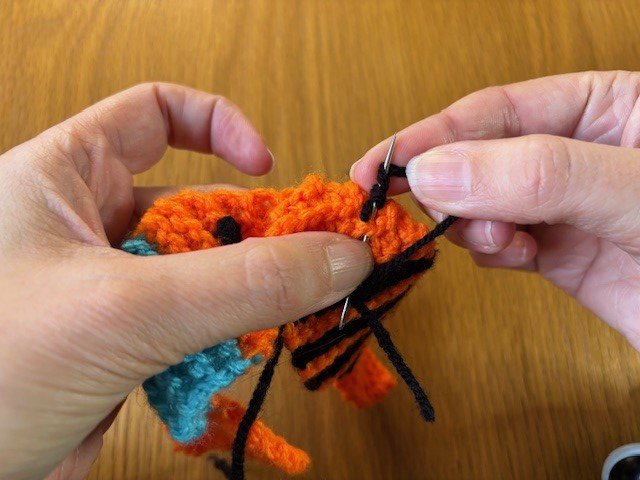
You can now thread any yarn tails onto a large needle and stitch them into your project to tidy them up, before snipping off any excess yarn.
You can either stitch along the edge of your project or across the back, depending on what will look best.
Along the Edge
Do this for about 5cm, then you can snip off any extra yarn.
Across the Back
If you have thin stripes of different colours mean that stitching along the edge would be quite visible. Instead, you can stitch the tail of yarn across the back of the project, then snip off any excess yarn.
Note: In a couple of the projects below the yarn tails are used for other parts of the project. Please read all of the instructions for each one.
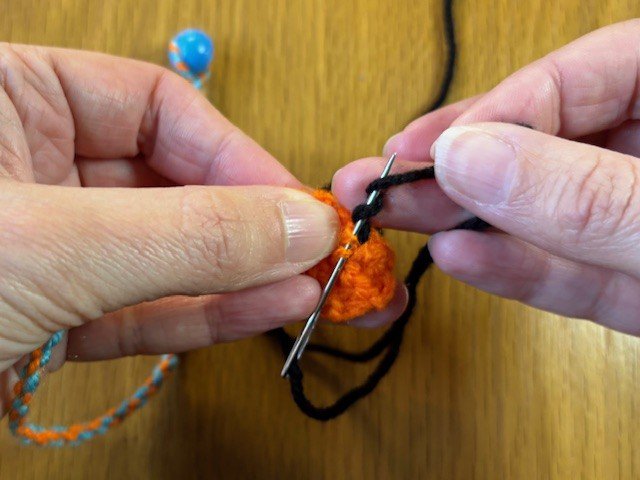
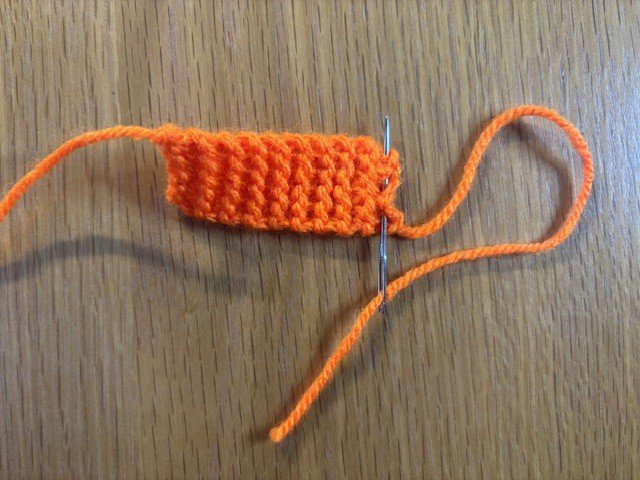
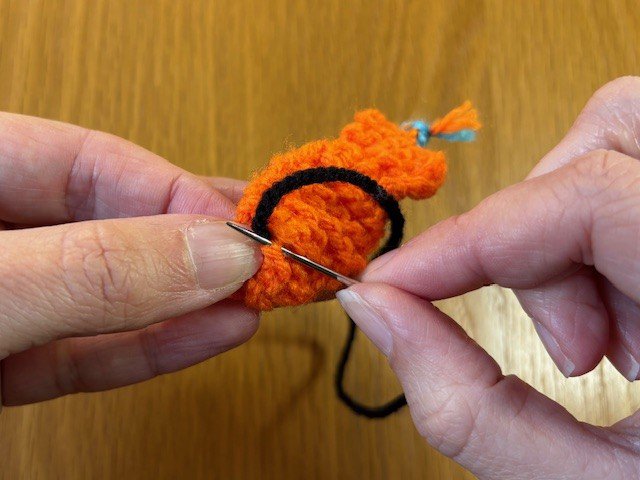
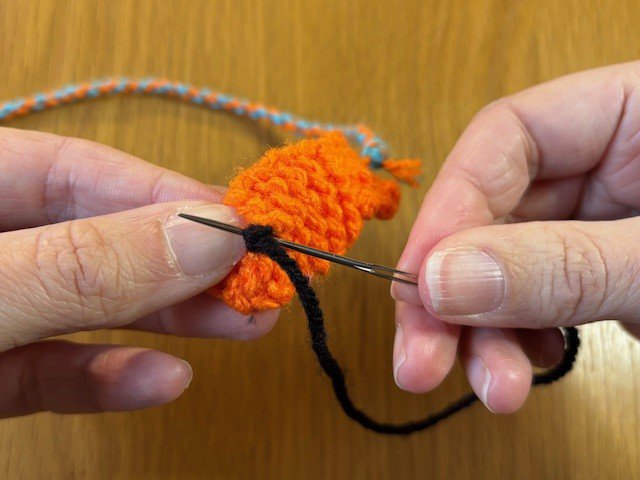
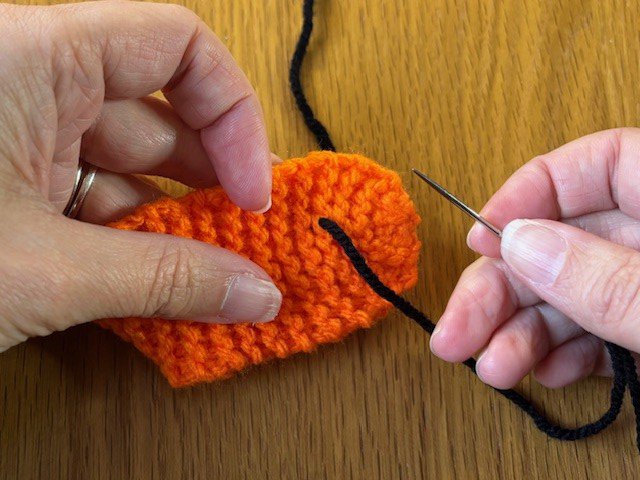
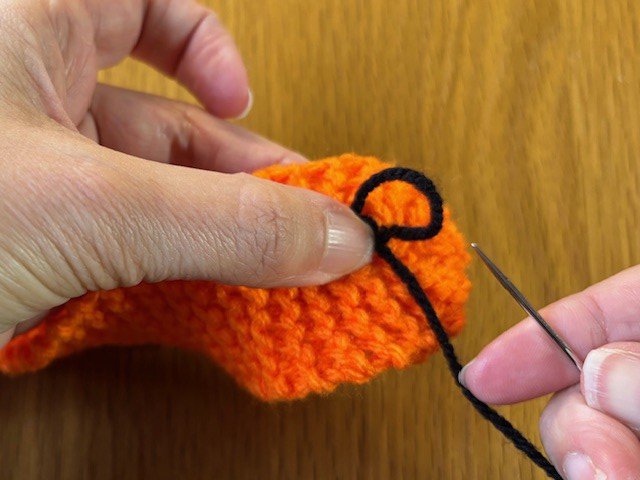
Thread a piece of yarn onto a large needle and push it through your project, from back to front, where you want the knot to be, leaving a tail of at least 20cm on each side.
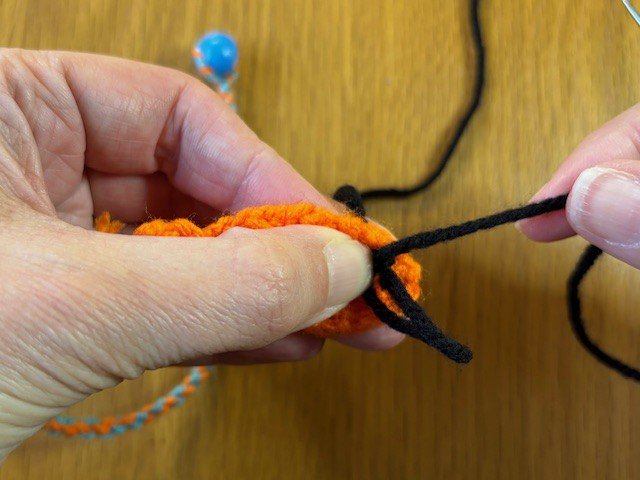
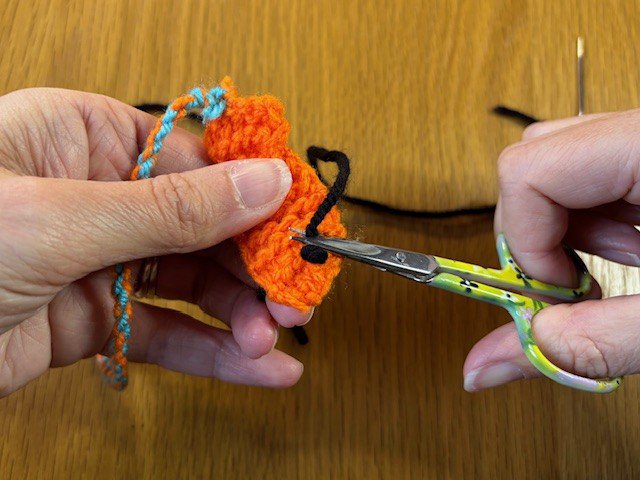
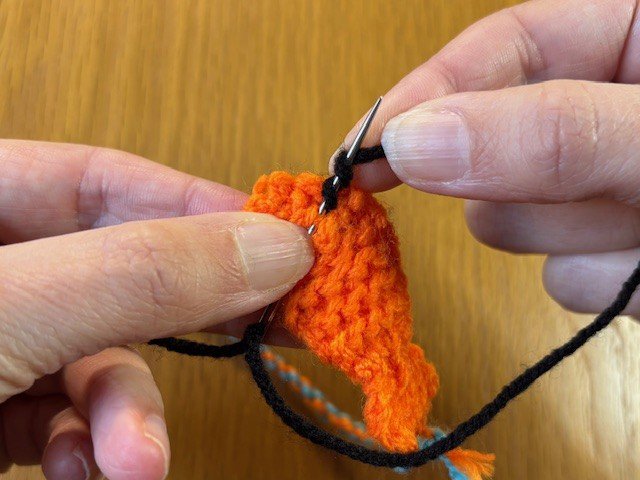
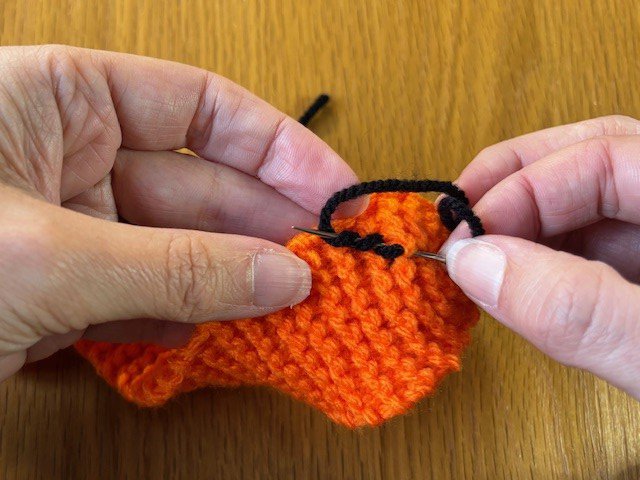
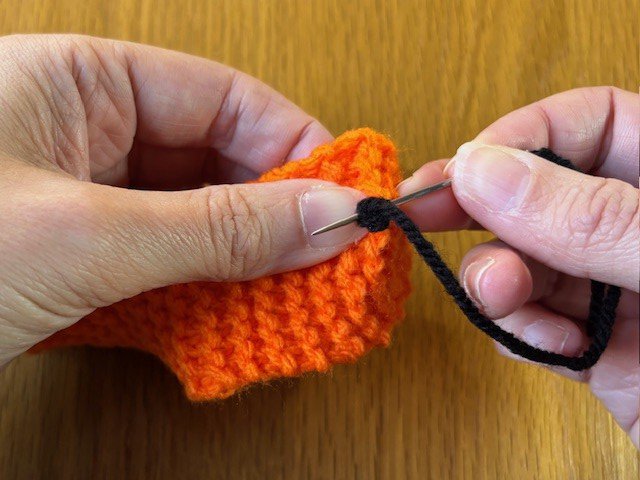
Start a small stitch where you want the eye to be, and before you pull the needle all the way through wrap the working yarn (the side closest to your project) around the needle at least twice - more if you'd like a bigger knot.
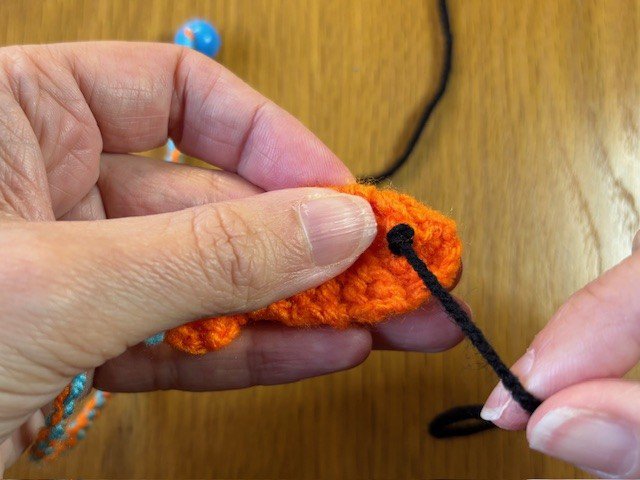
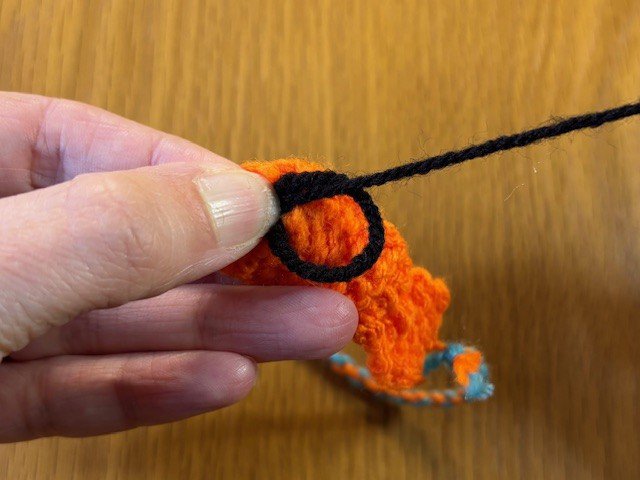
Pull the needle through, gently pushing the yarn loops down to secure the knot.
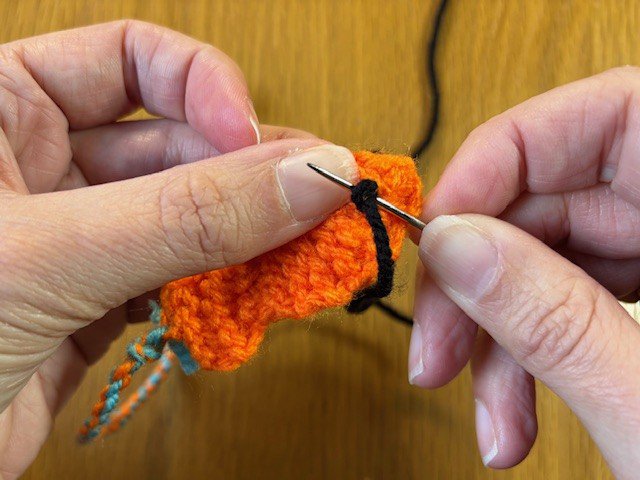
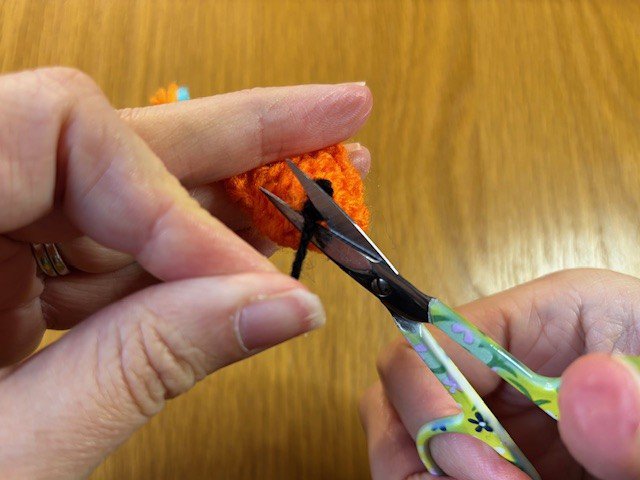
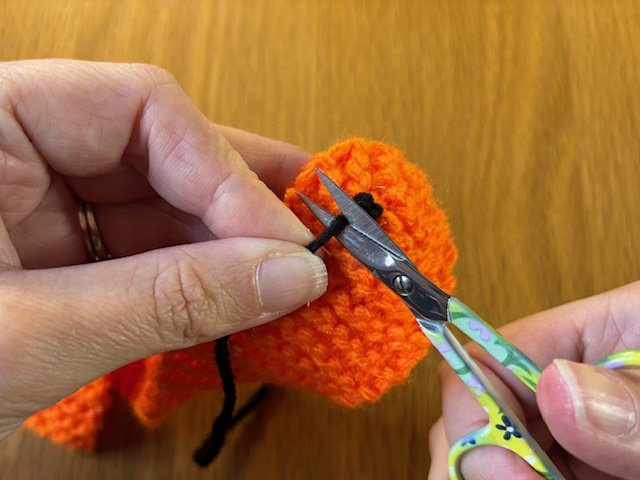
Put three small stitches in behind your French knot, to secure the yarn tail, before snipping it off.
Turn your project over.
You can either put a few stitches in with the yarn tail to secure it, then snip off the loose end, or you can repeat the above process to tie another French knot on the back of your project.
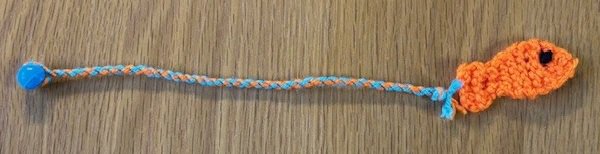
Project One - Little Fish and Twisty String Bookmark
A small and simple knitted fish on a twisty string bookmark - great for beginners.
For this project we used 3.25mm knitting needles. You can use a different size, but it will affect the width of your fish.
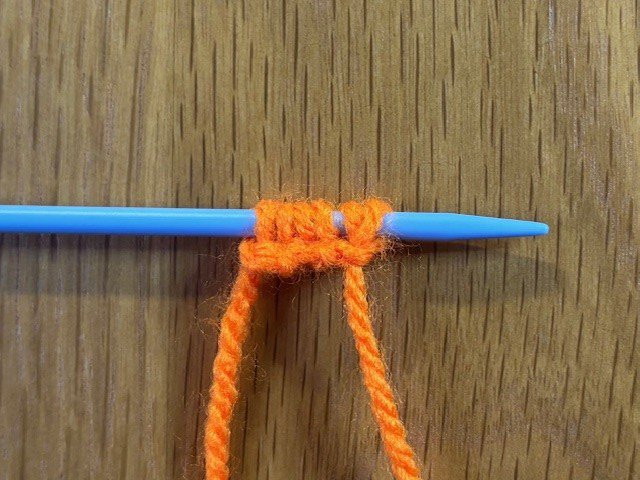
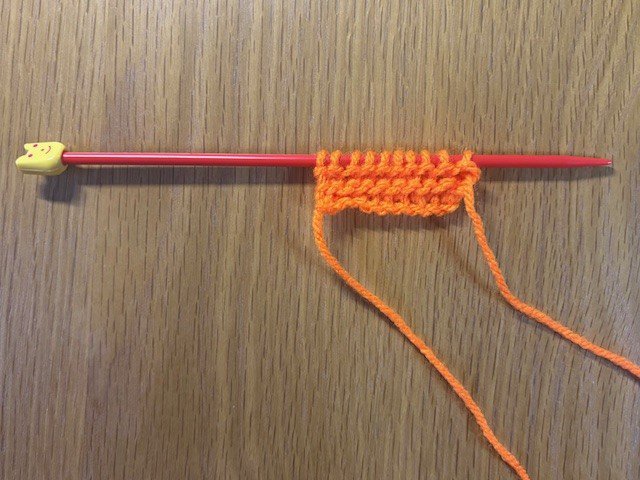
Tie a slip knot and cast on 6 stitches, keeping a 20cm tail of yarn.
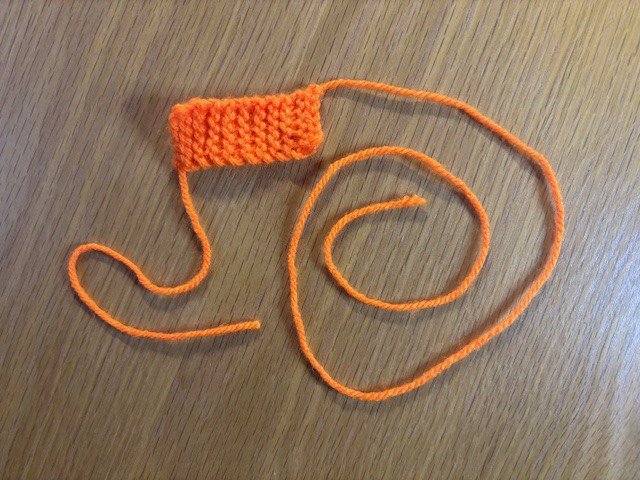
Knit enough rows to make your project measure 5cm long.
Cast off, keeping a 50cm tail.
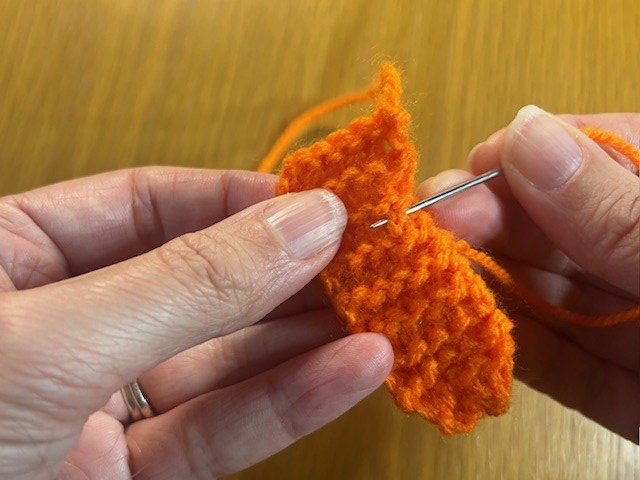
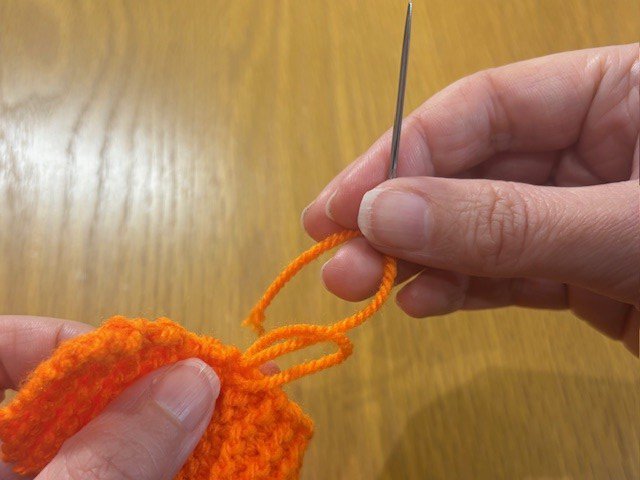
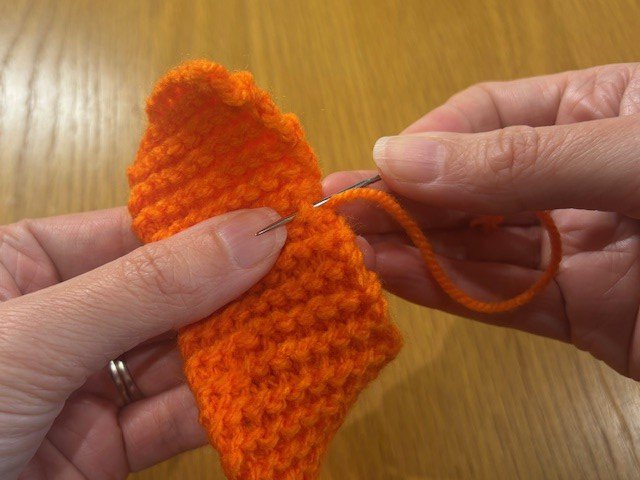
Thread the 20cm tail onto a darning needle and running stitch across the closest short side of the project.
Pull gently to gather. This will make the fish’s nose.
Secure the tip of the nose with a few stitches and a knot (don’t cut yet!)
With the same yarn tail, do a running stitch down the fish’s back (away from the nose) until you’re 1.5cm from the opposite short side.
Either tie a knot or back-stitch a couple of times here. This is to prevent the running stitches you’ve done from gathering.
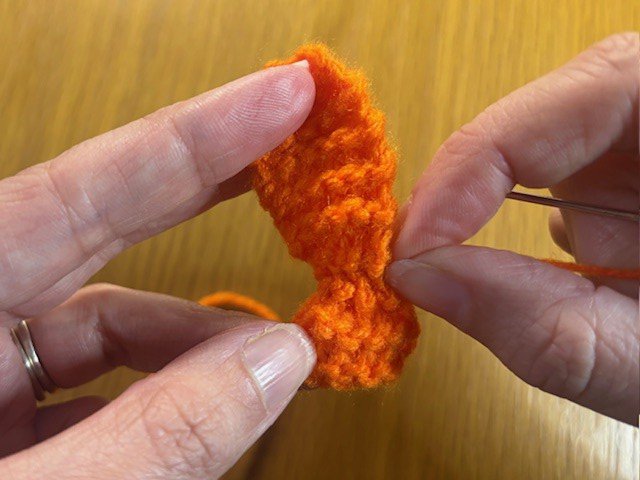
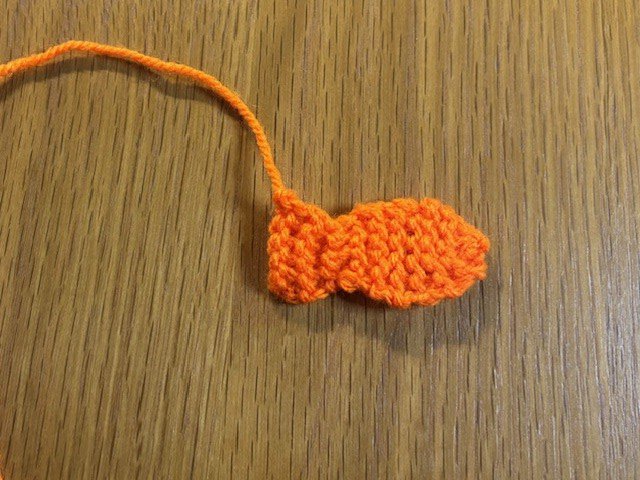
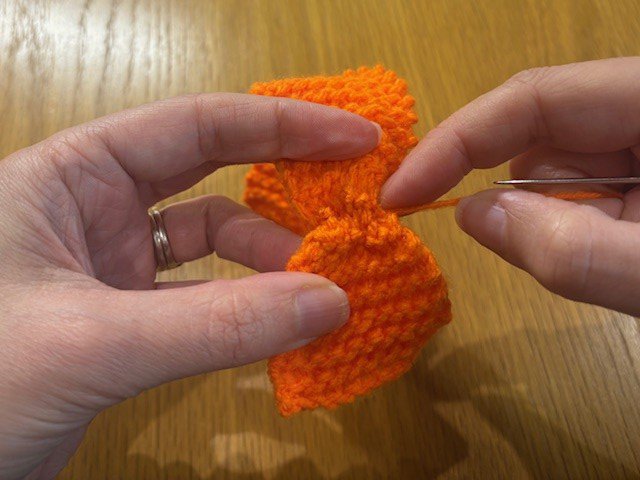
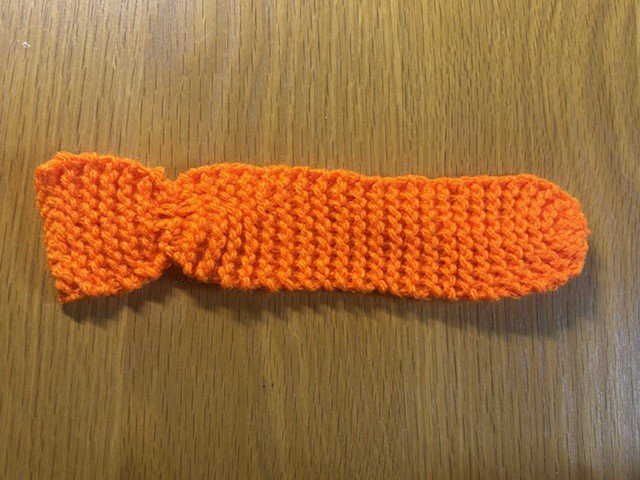
Now, running stitch all the way across the middle of the fish, then pull gently to gather. This forms shape of the tail.
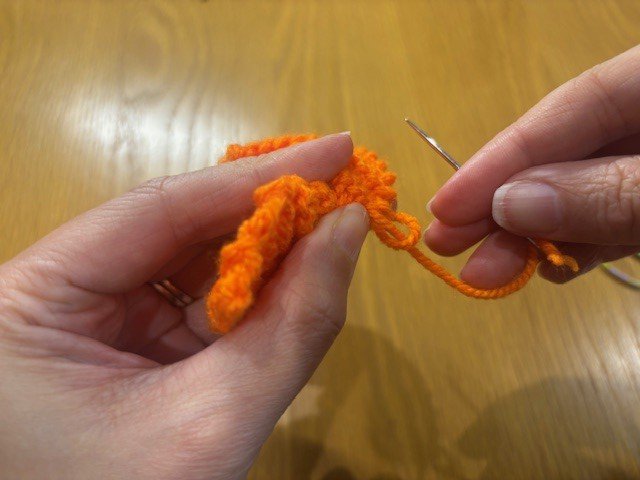
Secure the tail with a few stitches and a knot, then running stitch up the side of your fish (towards the nose), before snipping off the loose end.
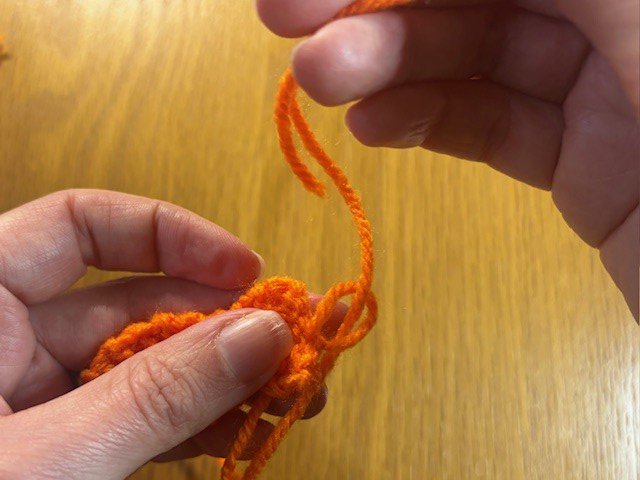
Take your 50cm yarn tail and running stitch along the tip of the fish’s tail, stopping halfway along and securing with a couple of stitches and a knot.
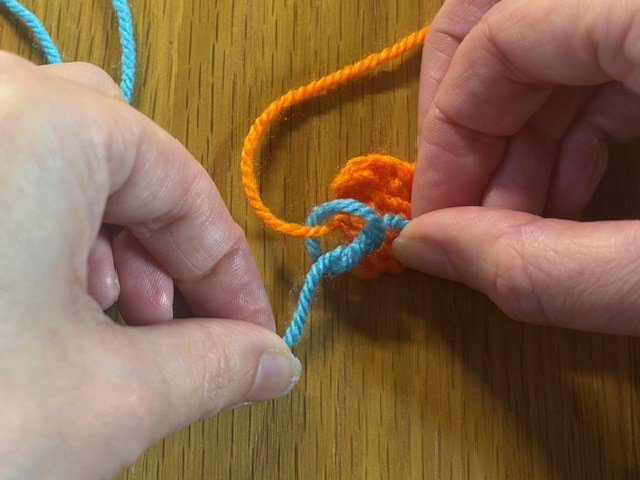
Add a new strand of yarn of the same length in a different colour, by tying it to the top of the 50cm yarn tail.
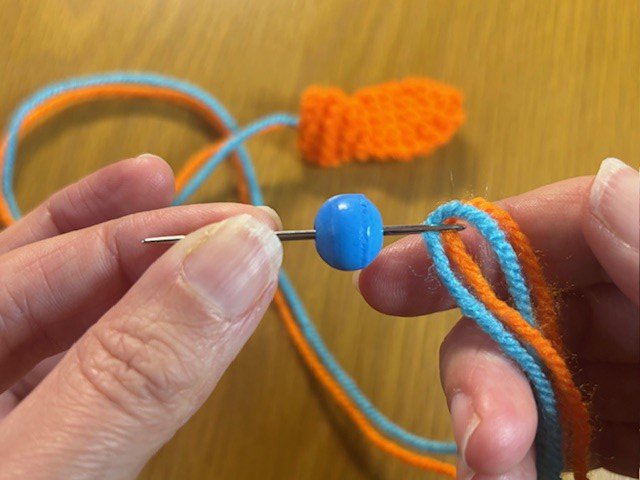
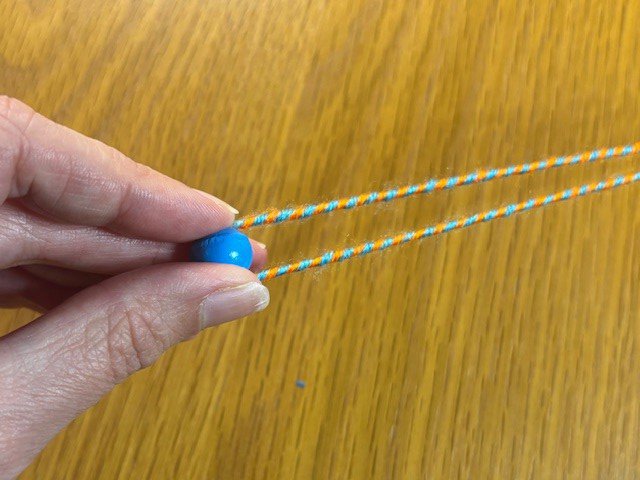
Thread a bead onto the two pieces of yarn.
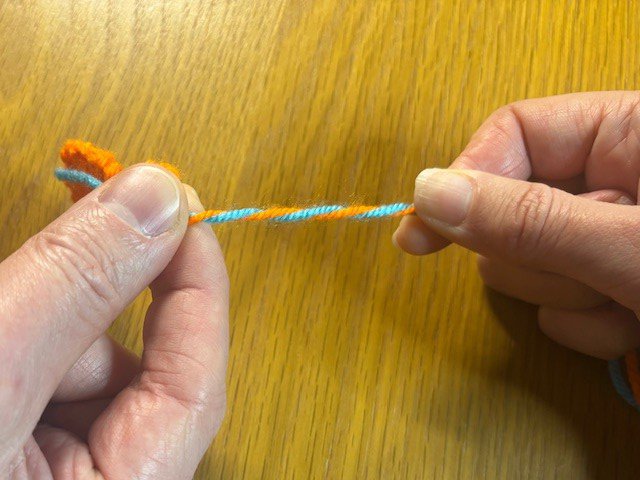
Twist the two pieces of wool over and over (this is easier if you can get a friend to hold the top end)
When you've reached the end of the two pieces of yarn, and twisted them together nice and tightly, move the bead to the middle of your twisted string.
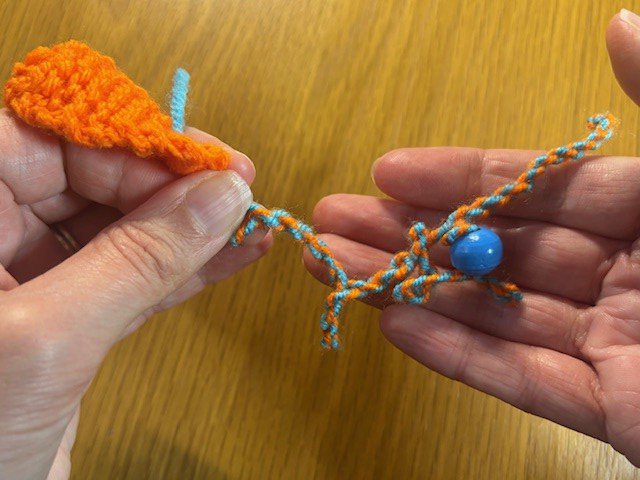
Hold the bead and bring the bottom end of the string up to the top end, folding it in half - don't let go of either end!
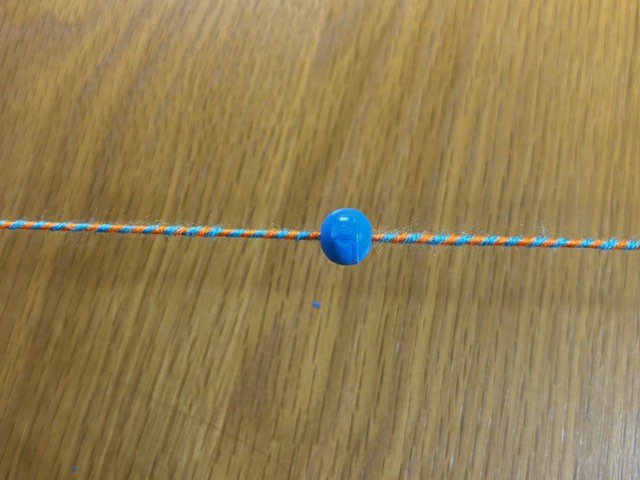
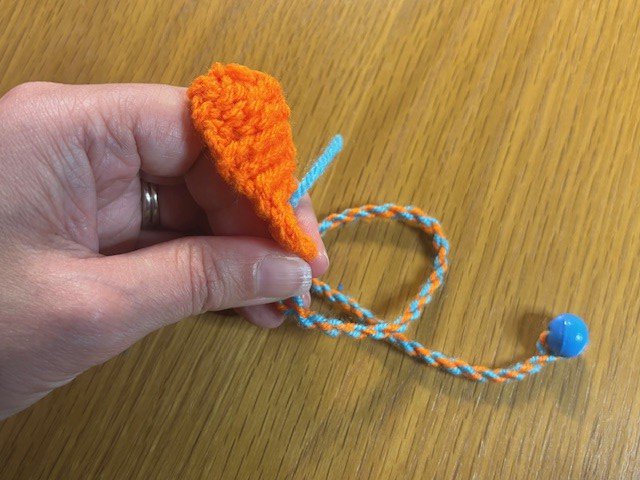
Let go of the bead (but not the other end!) and the string will twist itself together. Straighten out any tangles by pulling on the bead and smoothing the string with your fingers.
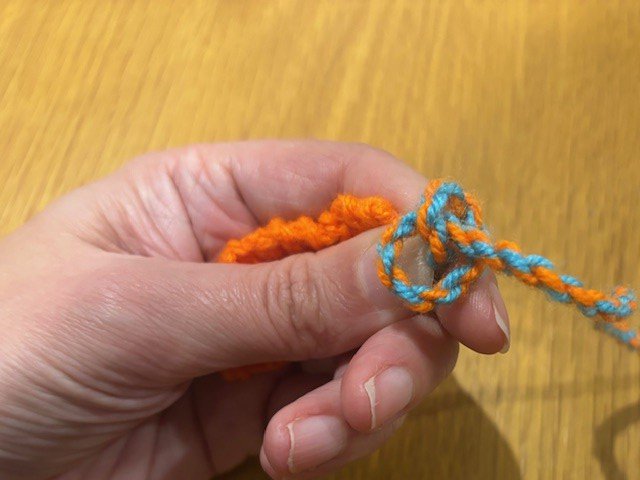
Tie a knot in your twisty string to secure it, just below the fish's tail, then trim the loose ends to tidy it up.
Tie a French knot on both sides of the fish, to make it's eyes. See the Knitting Basics section to learn how.
For our example we looped the thread around the needle twice.
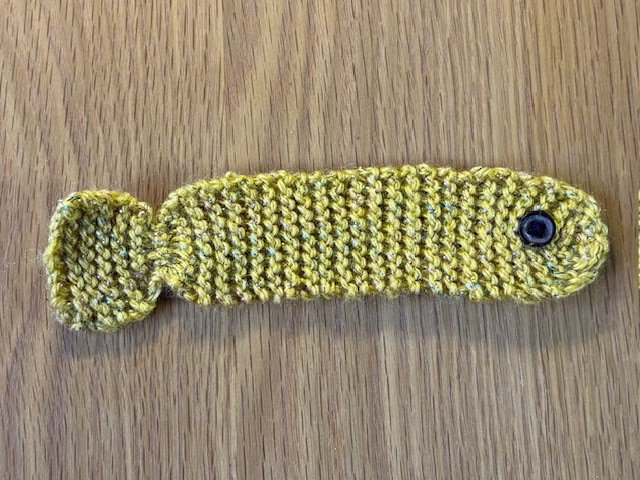
Project Two - Fish Bookmark
A larger fish bookmark - good for beginners who would like a bit more knitting practice.
For this project we used 4mm knitting needles. You can use a different size, but it will affect the width of your fish.
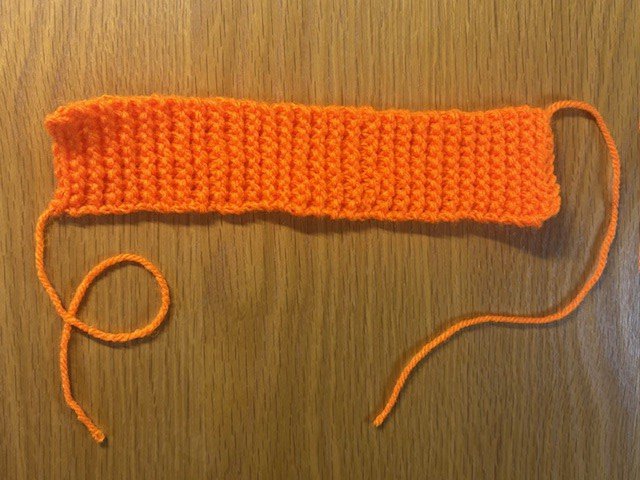
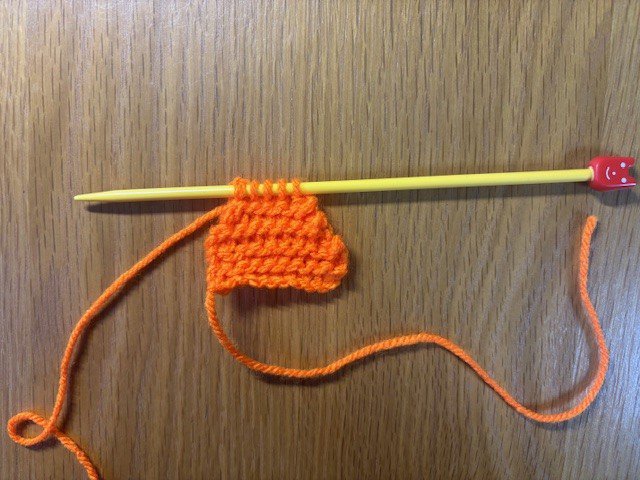
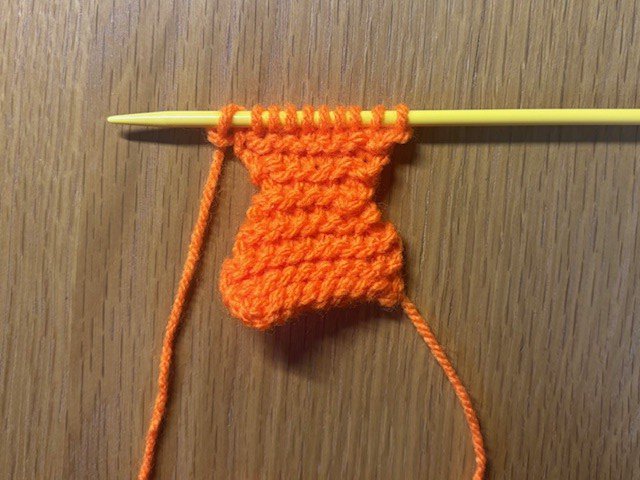
Tie a slip knot and cast on 10 stitches, leaving a 20cm tail of yarn.
Knit enough rows to make your project measure 20cm long.
Cast off, leaving a 20cm tail.
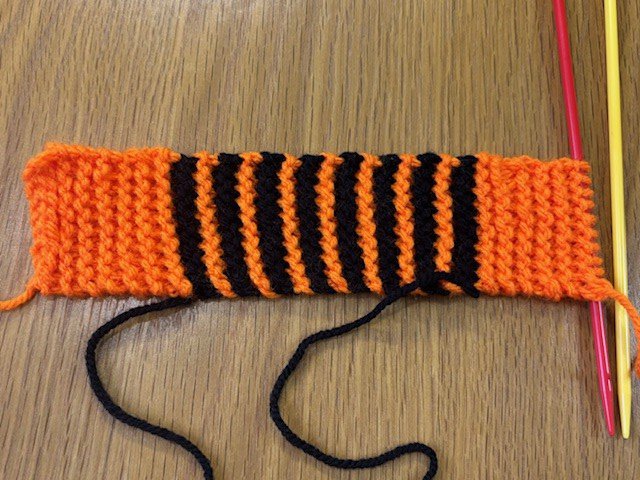
If you'd like a multi-coloured fish, you can see the section on Knitting Basics to see how to change to a different coloured yarn and tidy up the yarn tails at the end.
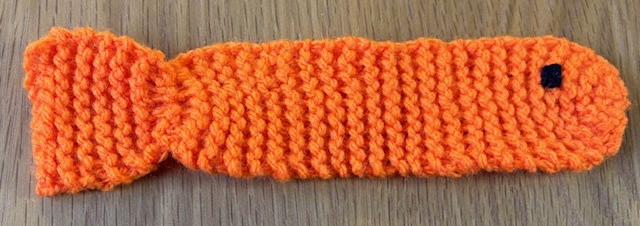
For our example below we made the body stripy, and kept the head and tail a solid colour. If you'd like to do this then start the colour change about 4cm into your rectangle, and go back to solid colour 17cm in, leaving 3cm of solid colour before you cast off.
The 4cm section will be the tail and the 3cm section will be the head.
Thread one of the tails onto a darning needle and stitch across the thin end of your fish. Pull gently to gather the end and make the nose.
Secure the tip of the nose with a couple of stitches and a knot.
With the same yarn tail, stitch down the fishes back for about 5cms, then snip off the loose end.
With the other yarn tail, run a line of stitches 4cm down the fish’s back
Either tie a knot or back-stitch a couple of times here. This is to prevent the running stitches you’ve done from gathering.
Stitch down the middle of the fish, to the opposite side of the rectangle.
Gently pull on the thread to gather in a section and make your fish's tail.
Tie a knot to secure the tail and then run a line of stitches down the side of your fish, then snip off the loose end.
For the fish's eyes, tie a French knot on both sides. See the Knitting Basics section to learn how.
For our example we wrapped the yarn around the needle three times.
If preferred you could sew a flat button on either side.
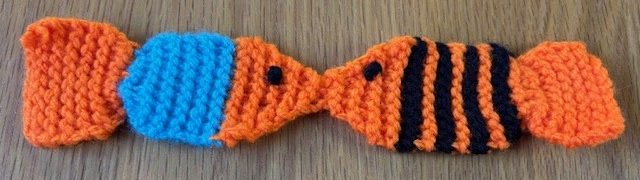
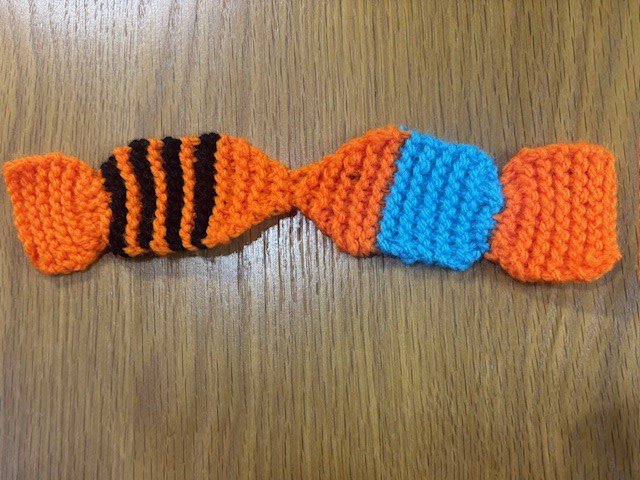
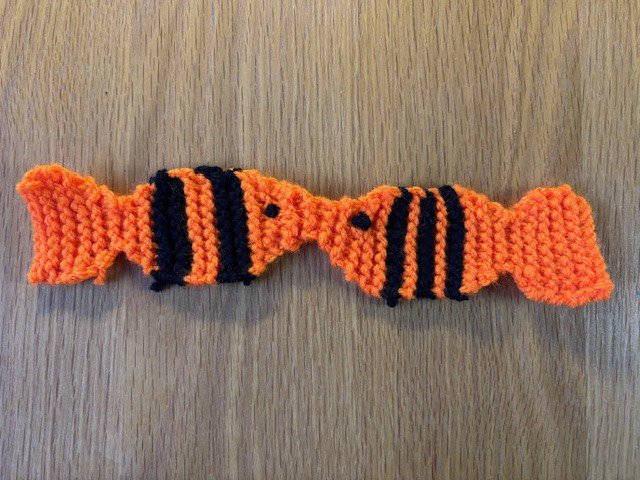
Project Three - Kissing Fish Bookmark
A simple project for knitters who want to practice increasing and decreasing.
By becoming a library member you will be able to borrow
books and items for FREE in libraries across the county, including mobiles. You
can also access eResources, Ancestry and more!